Turnitin
Starting at ≈ $3 per student / year (institutional license only)
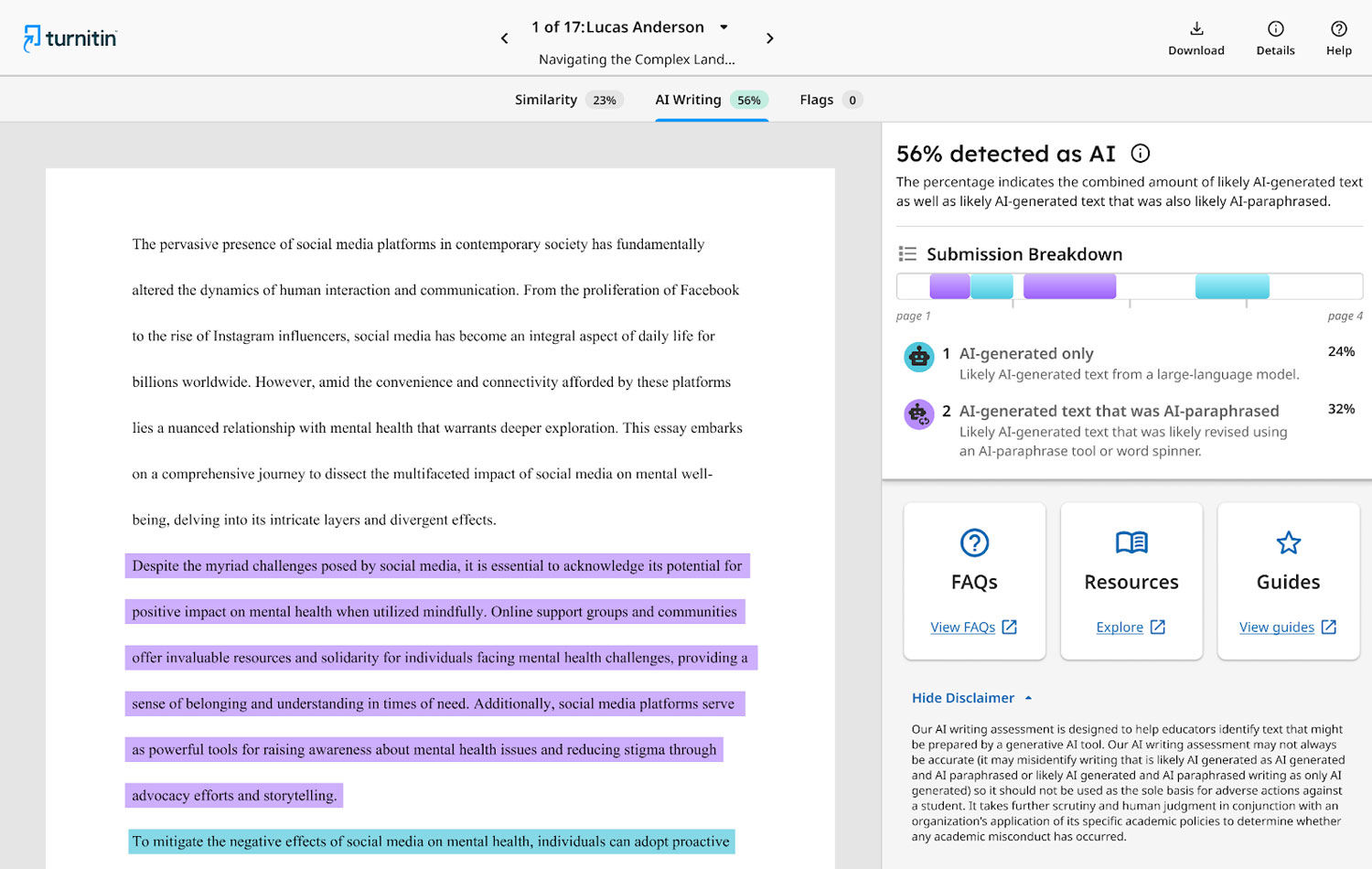
Turnitin—the long-time plagiarism giant—quietly folded AI-writing detection into its Similarity Report in April 2023. Now a single upload checks both copied sources and ChatGPT-style prose, spitting out a lone “AI %” badge but no sentence-level clues. For schools already embedded in the Turnitin ecosystem, that convenience is huge; for students, the black-box scoring system can feel like trial by algorithm. Continue reading if you want the low-down on a tool that’s everywhere, trusted by faculty, yet increasingly questioned for fairness.
Only available on the web
Checks Plagiarism + AI in One Pass
iOS Feedback Studio App for Mobile Reviews
The Ubiquitous Gatekeeper—But Is Its AI Eye Too Harsh?
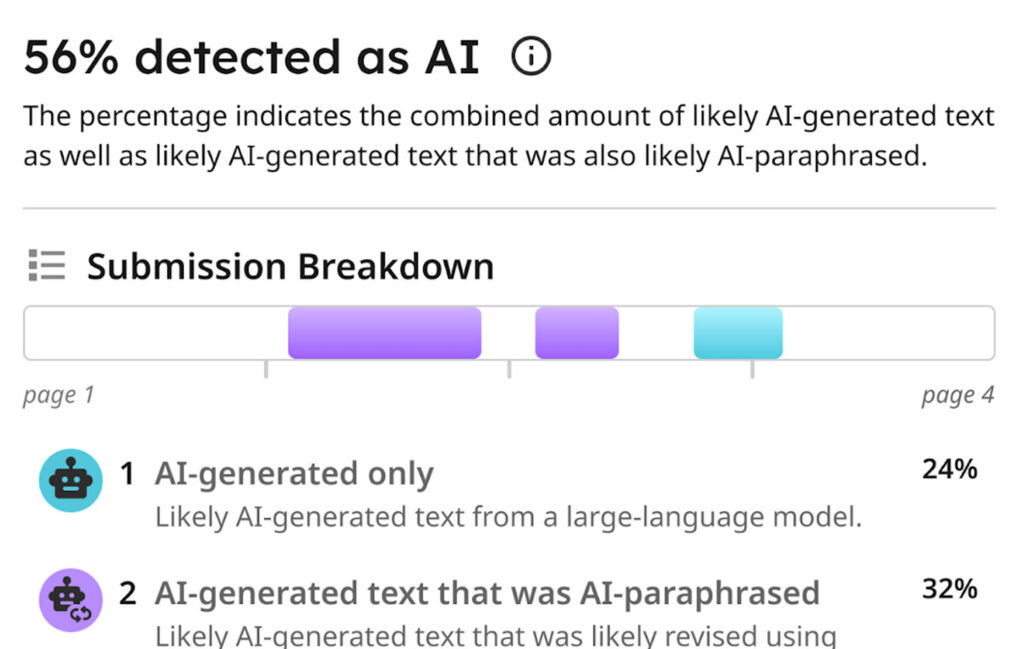
Turnitin’s reach is unmatched: more than 200 million papers have been scanned by its AI detector since launch, with 22 million showing at least 20 % AI writing. The workflow is frictionless for instructors—submit through Canvas, Blackboard, Teams, or the web; one report returns both similarity and an AI score. Scores below 20 % are now replaced by an asterisk to curb false positives, yet anything above that arrives as a stark percentage, without context or highlights.
That opacity fuels anxiety. Reddit is stacked with stories of handwritten essays flagged as “86 % AI,” and several universities—including Vanderbilt—have disabled the detector after noticing higher false-positive rates for non-native or neurodivergent writers.
Turnitin’s own guides tell educators to treat the number as “one data point,” but some faculty still use it as hard proof, creating a stressful appeal process for students.
Access remains institution-only; Turnitin does not sell individual licenses, though its free Feedback Studio iOS app lets enrolled students view reports on iPhone or iPad.
Pricing isn’t public, but leaked contracts suggest U.S. colleges pay roughly $3–$10 per student annually, bundling plagiarism, GradeMark, and now AI detection. Looking ahead, Turnitin promises “pedagogical improvements” and finer-grained AI cues, yet critics demand transparent algorithms and student self-check portals before trust can be fully restored.
The Pros and Cons of Turnitin
Turnitin delivers seamless plagiarism + AI checks inside existing LMSs but offers little transparency, triggering false-positive angst and limiting student agency.
Mixed-Text Detection Flags Franken-drafts With Sentence-Level Precision
Real-World Training Data Catches Humanizer Tricks Other Tools Miss
Histogram Confidence View Gives Transparent Evidence For High-Stakes Decisions
Enterprise-Centric Onboarding Means No Instant Paste-Box For Curious Individuals
Dashboard Metrics Lean Heavily On ML Jargon And Research-Grade Graphs
Minimalist Interface Feels Intimidating And Lacks Friendly Guided Walkthroughs
Reviews of Turnitin
There are no reviews yet. Be the first one to write one.
Similiar Apps
It is a long established fact that a reader will be distracted by the readable content of a page when looking at its layout.