GPTZero
Free for 10 k words/mo), Essential $8.33/mo, Premium $12.99/mo, Professional $24.99/mo
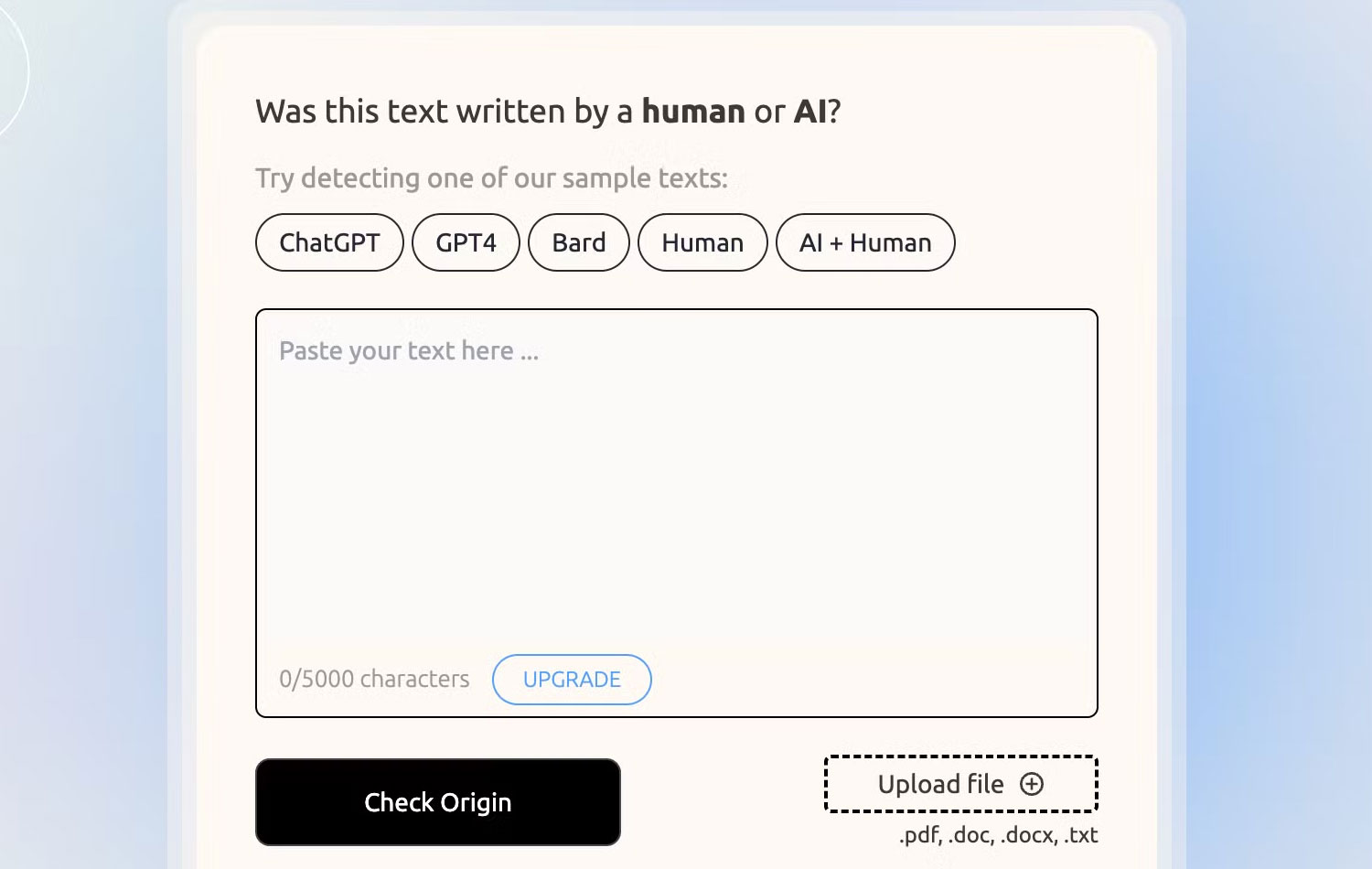
Born in a Princeton dorm during the “ChatGPT panic,” GPTZero promises to sniff out AI-written text in seconds. Paste, click, and it scores every sentence for “perplexity” and “burstiness,” then colour-codes the lines it thinks a robot wrote. Chrome and Word add-ins let teachers run checks without leaving their workflow, while a Human Writing Report helps students defend their prose. Accuracy is still shaky—formal essays can trip false positives—but if you need a quick gut-check, GPTZero is the easiest place to start.
Only available on the web
Sentence-Level Highlighting for Suspect Lines
Chrome & Microsoft Word Extensions Built-In
Can GPTZero Really Tell Who Wrote That Paragraph?
GPTZero’s origin story is internet lore by now: in January 2023, Princeton senior Edward Tian hacked together a Streamlit app that crashed after 30 000 hits in a day; two years and $10 million in funding later, the tool claims millions of users and integrations across Canvas, Moodle, and Zapier.
The workflow is dead-simple. Drop in a doc (up to 500 k words on a Pro plan), or paste raw text. Within seconds GPTZero spits out three metrics: an overall “AI vs. human” verdict, a perplexity score (how predictable the prose is), and a burstiness score (how much sentence length varies). Green means likely human; yellow and orange suggest machine help. Hover over sentences and you’ll see probability bars—useful if you’re trying to revise wording without completely nuking style.
Teachers get niceties like a Chrome extension that flags AI passages as they grade Google Docs, plus a Word add-in for offline essays. A new “Human Writing Report” bundles timestamps and revision history to prove authorship, a nod to criticism that raw scores alone aren’t courtroom-ready. Multi-file scanning, API access, and SOC-2 compliance land in the Professional tier, making GPTZero viable for newsroom or LMS roll-outs.
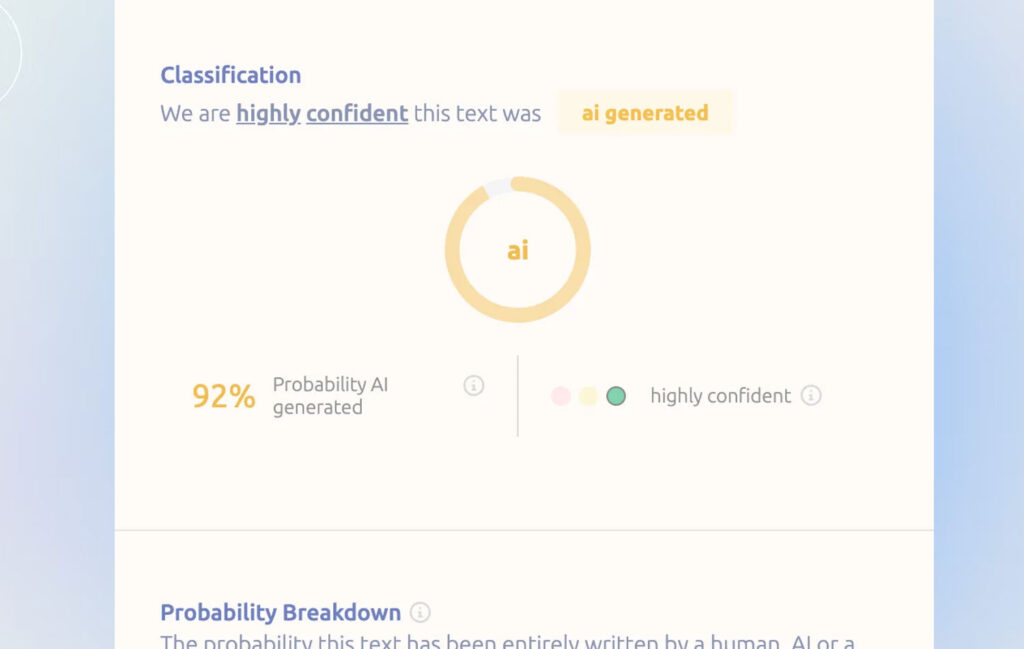
But real-world testing shows limits: a spotless student essay can look “too perfect” and get flagged, while a lightly rephrased ChatGPT paragraph may skate by. Wired and Reddit threads chronicle the arms race—detectors improve, rewriters adapt, and everyone argues over false positives.
Even GPTZero’s docs warn against using a single scan as definitive proof. Expect the roadmap to lean into provenance tech—think watermarking and authorship trails—rather than binary guilt verdicts.
The Pros and Cons of GPTZero
Lightning-fast, classroom-friendly scans make GPTZero handy, yet accuracy quirks and opaque metrics still demand human judgment.
One-Click Scan With Sentence-Level Highlights Simplifies Rapid Classroom Checks
Browser And Word Plug-Ins Keep Detection Inside Existing Teacher Workflows
Human Writing Report Adds Context And Evidence For Authorship Disputes
Formal, Polished Prose Often Trips False-Positive AI Flags For Students
Perplexity And Burstiness Scores Lack Plain-Language Explanation For Novice Users
Small Text Tweaks Can Swing Results, Undermining Confidence In Consistency
Reviews of GPTZero
There are no reviews yet. Be the first one to write one.
Similiar Apps
It is a long established fact that a reader will be distracted by the readable content of a page when looking at its layout.