Midjourney
Starting at $10 a month
Midjourney remains a flagship text-to-image tool even as Adobe Firefly and DALL·E 3 crowd the market. Version 7, released April 2025, sharpens detail, introduces Draft Mode and lives inside a tidy browser studio. But there’s no free tier, GPU minutes vanish quickly, and a still-active copyright lawsuit may worry big clients. We tested the latest build across marketing, illustration and storyboard tasks—read on to see where Midjourney still excels and where it lags for creators of every skill level.
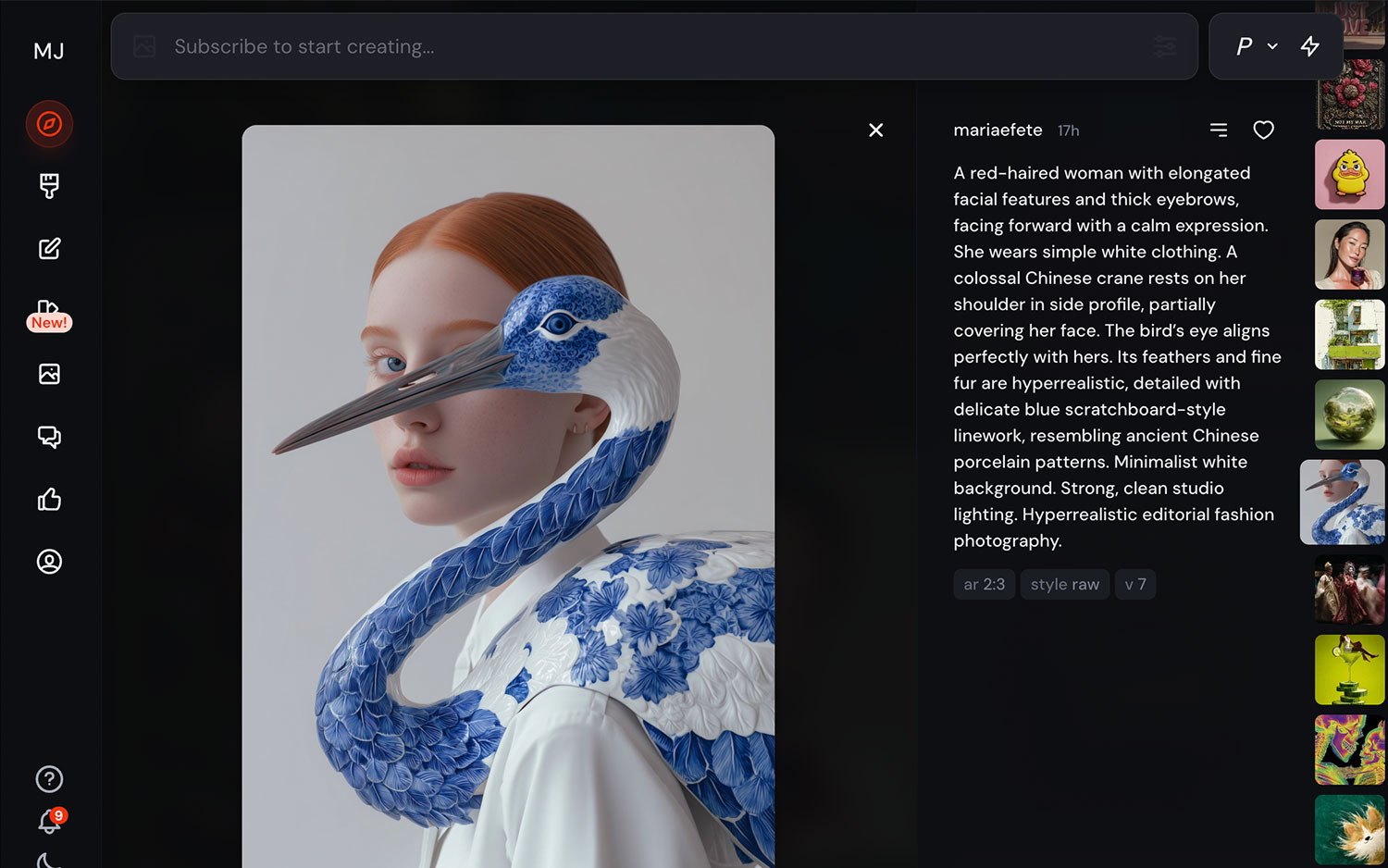
Only available on the web
Easy to Use
Rapid ideation
Midjourney in 2025: A Closer Look
Midjourney rose on Discord in 2022, showing text prompts could yield studio-grade art. Today it lives at Midjourney.com, where a clean dashboard lets you type, tweak, and export without slash commands. Layers, erase-brush and zoom mean many edits happen before Photoshop even opens. Draft Mode—a lightweight render path costing half a GPU minute—arrived with Version 7 on 3 April 2025 and delivers previews about ten times faster than the standard engine. That speed makes it perfect for thumbnail brainstorming, while full-resolution renders still deliver painterly lighting many users feel outclasses Firefly or Ideogram.
Version 7 also sharpens prompt fidelity, smooths colour gradients, and debuts Omni-Reference tags for steadier faces and costumes; Midjourney says character consistency now hovers around 90 %. Images export at up to 8 K PNG or layered PSD, and generations can be filed privately or shared via the public Explore feed.
Pricing stays straightforward: Basic $10/month (3.3 fast GPU hours), Standard $30 (15 hours plus unlimited Relax mode), Pro $60 (30 hours and Stealth privacy), and Mega $120. There is no free tier, so newcomers must commit or wait for promo codes.
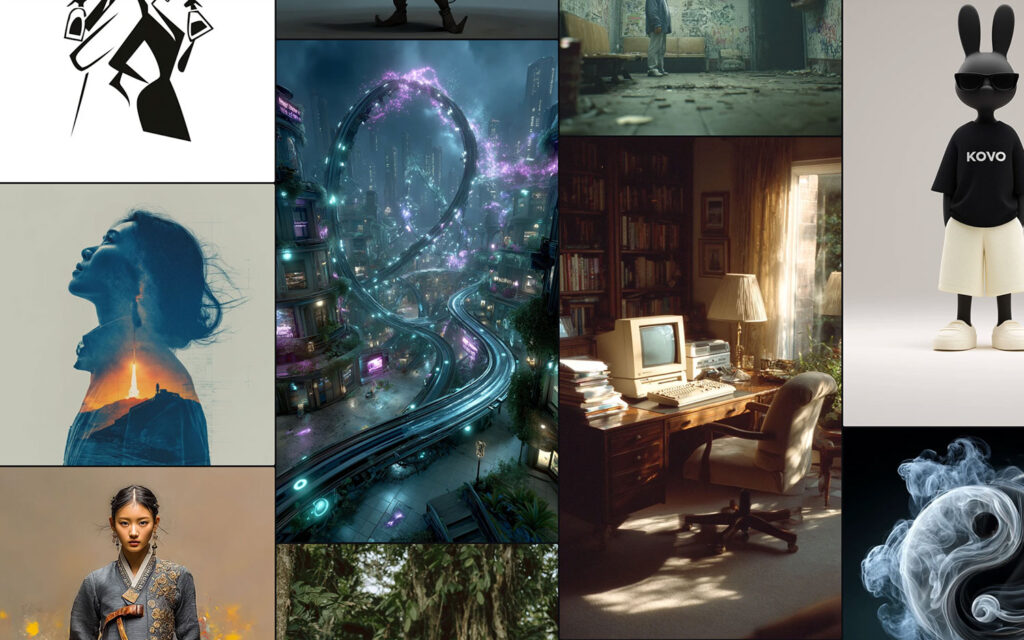
Who uses it? Freelance illustrators craving a house style, social teams needing daily visuals, and indie filmmakers storyboarding scenes before animating them in Runway or Pika. Professors appreciate the browser workflow because campus laptops can’t run local diffusion models.
Limits remain. There’s no private fine-tuning, text on images still warps, and a Northern District of California copyright lawsuit continues to shadow big-company adoptiom. Founder David Holz has teased a style-transfer pipeline and enterprise API for late 2025 that could help Midjourney reclaim its early-leader shine. Overall, Midjourney V7 is an agile, powerful illustrator for creators willing to budget GPU minutes and navigate an evolving legal landscape.
The Pros and Cons of Midjourney
Midjourney’s 2025 release still keeps its creative spark alive, but subscription costs, feature gaps, and legal overhangs make it a stronger fit for agile creators and agencies than cautious corporates.
Browser studio packs layers, erase brush, and zoom for faster edits
Draft Mode cuts render cost in half and generates ten-fold faster
Paid tiers include commercial rights and optional Stealth privacy for agencies
No free tier; GPU minutes drain quickly on high-res experimentation
Ongoing copyright lawsuit creates legal uncertainty for risk-averse enterprises today
No fine-tuning or reliable text rendering compared with others
Reviews of Midjourney
There are no reviews yet. Be the first one to write one.
Similiar Apps
It is a long established fact that a reader will be distracted by the readable content of a page when looking at its layout.