
Pangram Review (2026)
The accuracy leader the academics keep validating
Top5Apps editorial · Last tested & updated September 3, 2026 · Reviewed under The Receipts Standard
Developer
Pangram Labs
Free tier
Yes — limited scans
Paid from
~$15/mo
Platforms
Web, API, Chrome
What is Pangram?
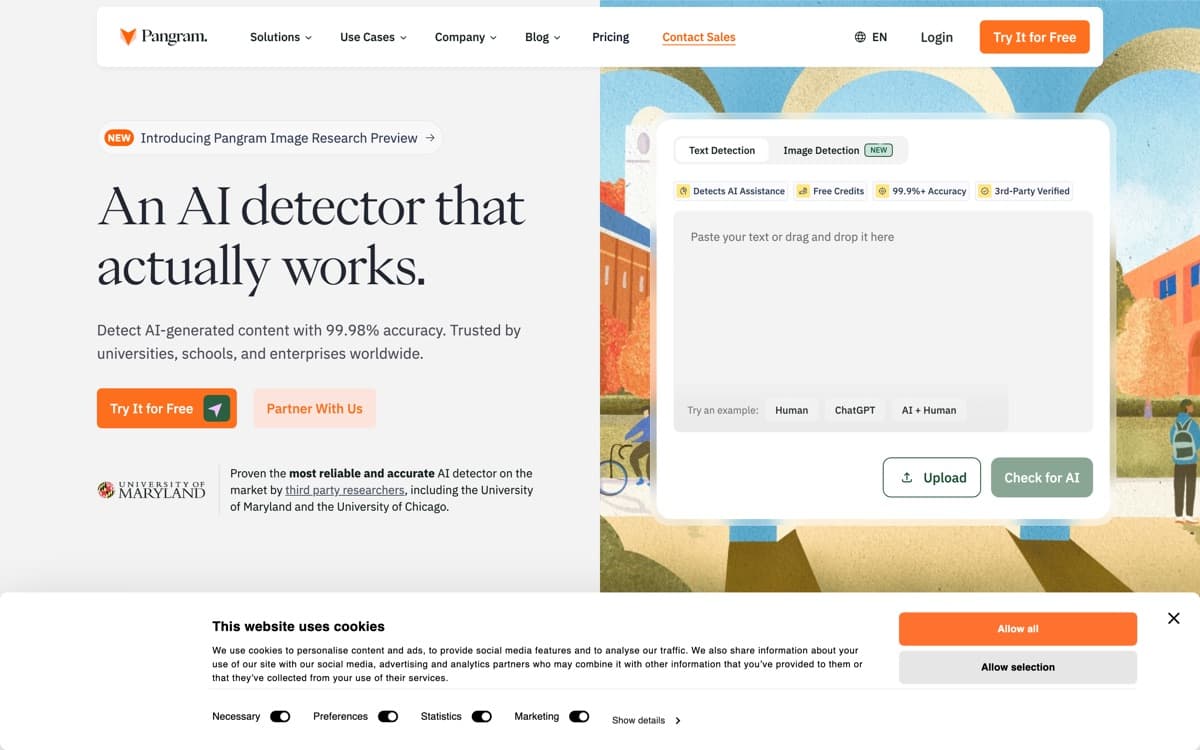
Pangram arrived in 2024 making an uncomfortable claim — that the incumbent detectors were far less reliable than advertised — and then kept winning the independent evaluations that followed. Peer-reviewed comparisons through 2025 and 2026 repeatedly place Pangram at or near perfect on benchmark sets where legacy tools wobble, with false-positive rates an order of magnitude lower. Our own gauntlet (fresh model outputs, edited hybrids, non-native human writing) matched the literature: it's the most trustworthy signal in the category right now. The receipts keep arriving — a peer-reviewed June 2026 evaluation of long-form academic papers found Pangram was the only commercial detector that performed well, at 97.5% inclusive accuracy with zero false positives, while the legacy rivals missed 70–100% of the AI-written papers outright.
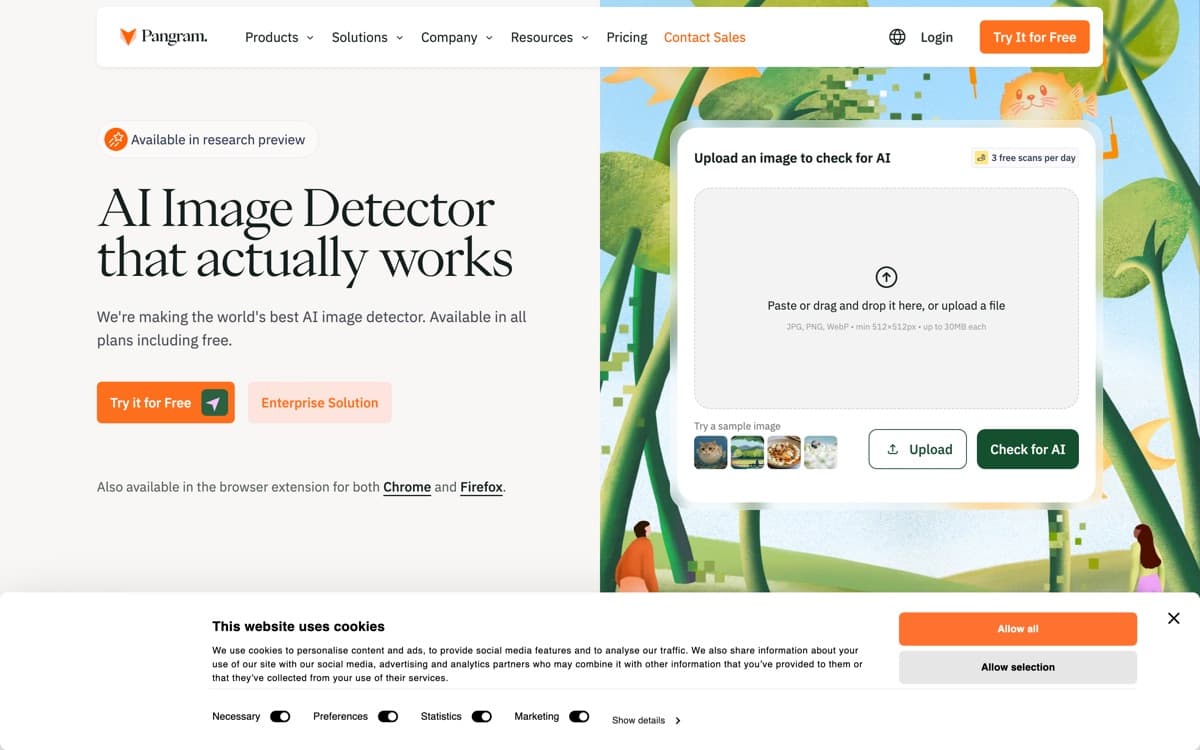
The technical bet was training against the failure modes that plague detection: active-learning on hard negatives, explicit robustness work against paraphrasing tools, and calibration so a '99% AI' score actually means something. The product is developer-and-workflow-first — API, batch scans, per-sentence attribution — and while it lacks the education-platform trimmings of GPTZero or Turnitin's LMS lock-in, publishers and platforms that just need the right answer at scale have been migrating steadily. The pace hasn't slowed: Pangram 4 shipped in late July 2026 alongside a $9M round led by Menlo Ventures, with image detection now in research preview — the vendor's internal benchmarks claim another big false-positive improvement, a number we'll cite once independent testing confirms it.
Pangram: pros and cons
Pros
- Top accuracy in independent academic evaluations, including on 2026-era models
- Dramatically lower false-positive rates than legacy detectors in our tests
- Holds up better against paraphrasers and 'humanizers' than rivals
- Fair to non-native English writers — the classic failure mode, addressed
- Clean API and per-sentence highlighting for reviewers
Cons
- Younger company with a thinner integration ecosystem (no LMS plugins yet)
- Web dashboard is spartan next to GPTZero's platform
- Pricing tiers still stabilizing as the product matures
Standout features
Benchmark-validated accuracy
The rare vendor whose marketing numbers survive third-party academic testing — including robustness against humanizer tools designed specifically to beat detectors.
Calibrated, honest scoring
Probabilities that mean what they say, with per-sentence highlighting showing which passages drive the score — reviewable evidence instead of a black-box verdict.
Built for scale
A clean API with batch processing and consistent latency — the choice for platforms screening thousands of submissions daily.
Pangram pricing
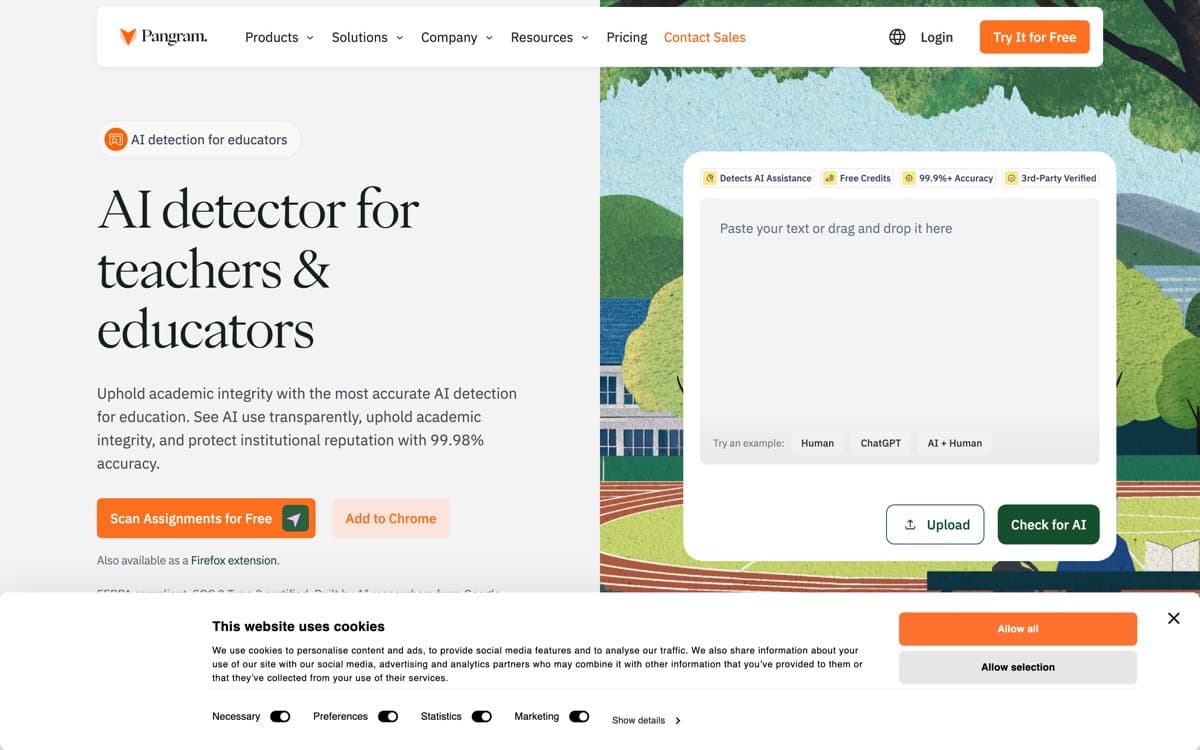
A free tier covers casual checking. Individual/pro plans run around $15/month for regular volume, with usage-based API pricing and enterprise contracts for platforms. Pricing has shifted as the product matured — check current tiers.
For organizations, the pricing conversation is usually about API volume; per-word costs land competitive with Originality while outperforming it in our accuracy testing.
Our verdict
Pangram is the detector we trust most in 2026 — the accuracy leader with the receipts to prove it. Educators wanting classroom workflows should still look at GPTZero; everyone whose primary question is simply 'is this AI?' should start here.
Skip it if: You need classroom workflow — LMS plumbing, batch grading, writing-process evidence — rather than the most accurate single verdict. GPTZero built that layer; Pangram hasn't yet.
4.7 / 5 — #1 in AI Detectors 2026
Pangram: FAQ
Is Pangram really more accurate than GPTZero and Turnitin?
In multiple independent academic evaluations through 2025–26 — and in our own testing — yes, particularly on false positives and paraphrased/humanized text. No detector is perfect; Pangram is currently closest.
Does Pangram work on ChatGPT-5 and Claude-era text?
It's held up well against current-generation models in our fresh-output tests, degrading less than legacy tools as models improve — though heavily edited hybrid text challenges every detector.
Can Pangram detect AI in languages other than English?
Coverage beyond English exists but is younger; for high-stakes non-English detection, validate on your own samples first (good advice for every tool here).
Is Pangram the same as Pangram Labs?
Yes — Pangram Labs is the New York company; Pangram is its detector product. You'll see both names in coverage and research papers, but there's one tool behind them, reviewed here.
Head-to-head: Pangram vs GPTZero
Related rankings: best AI chatbots · best AI image generators