
Turnitin AI Detection Review (2026)
The institutional incumbent, wiser after its stumbles
Top5Apps editorial · Last tested & updated September 3, 2026 · Reviewed under The Receipts Standard
Developer
Turnitin
Free tier
No — institutional licensing
Paid from
Institutional contracts
Platforms
LMS-integrated (Canvas, Moodle, Blackboard), Web
What is Turnitin AI Detection?
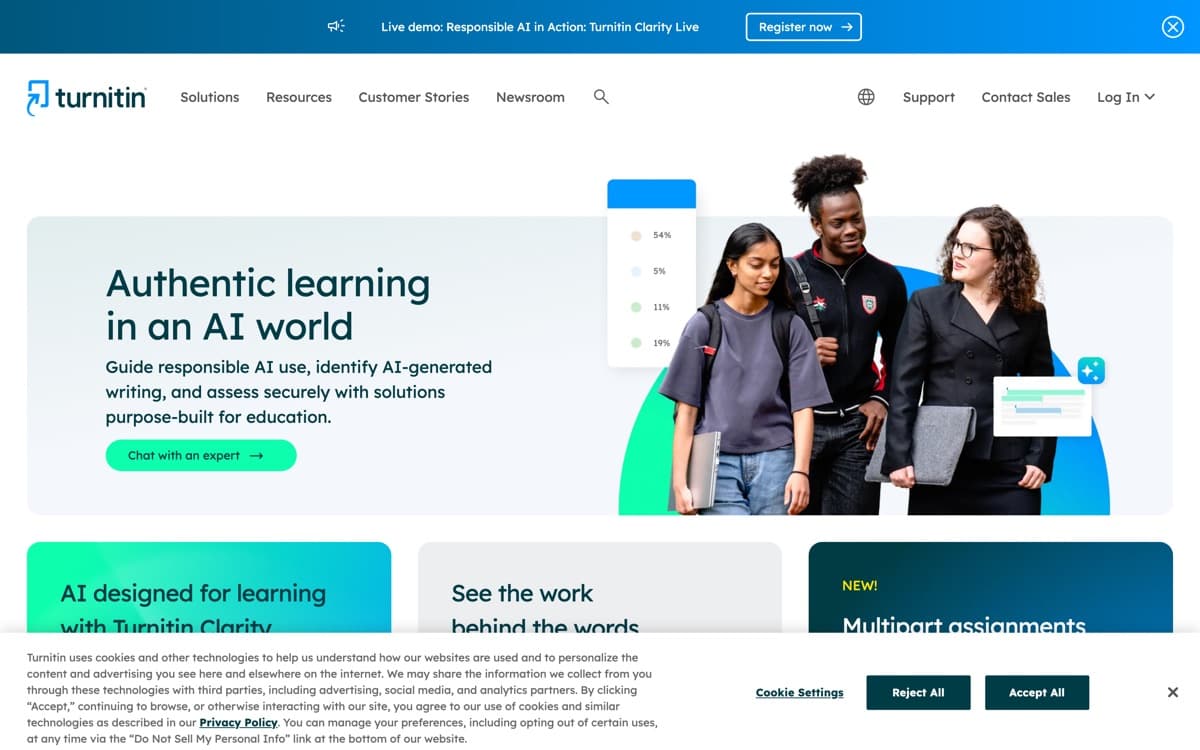
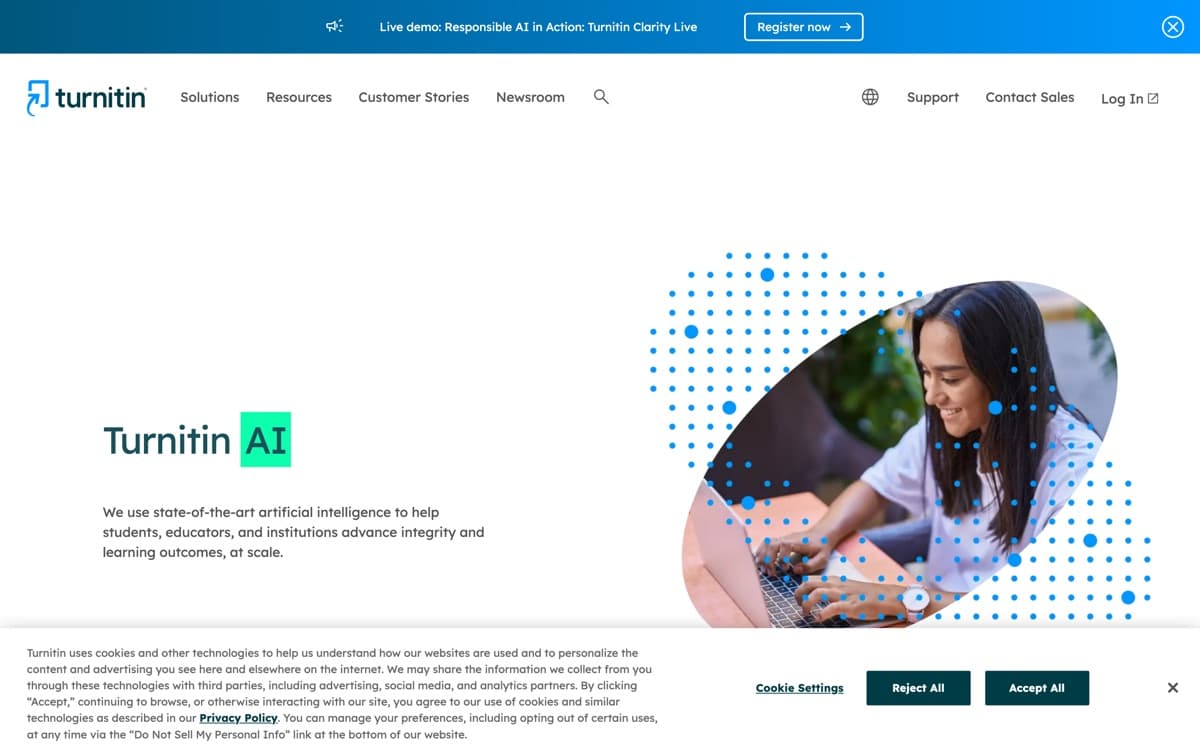
Turnitin is where AI detection meets institutional reality: it's already embedded in the assignment inboxes of most of the English-speaking academic world, so its AI indicator reaches more graded work than every other tool combined. The 2023 launch was rocky — confident percentages, painful false positives, universities publicly disabling it — and the 2024–26 rebuild deserves credit: scores now arrive banded with explicit uncertainty language, paraphrase-tool detection improved materially, and the surrounding governance features (policy templates, audit trails, process documentation) reflect lessons learned the hard way. The scale it polices is a stat in itself: Turnitin's own platform data shows about 15% of essay submissions since October 2025 were more than 80% AI-written — five times the rate at its detector's 2023 launch.
Our position for institutions is pragmatic. Turnitin's detection is adequate-to-good and improving, its false-positive handling is now among the more responsible, and its integration advantage is insurmountable for classroom workflow. But accuracy leadership lives elsewhere — the June 2026 peer-reviewed long-form evaluation had Turnitin missing every fully AI-generated paper in its sample — and any integrity process worth its name treats the score as the beginning of a documented, human process. Turnitin's own guidance finally says the same.
Turnitin AI Detection: pros and cons
Pros
- Zero-friction deployment inside the grading workflow schools already use
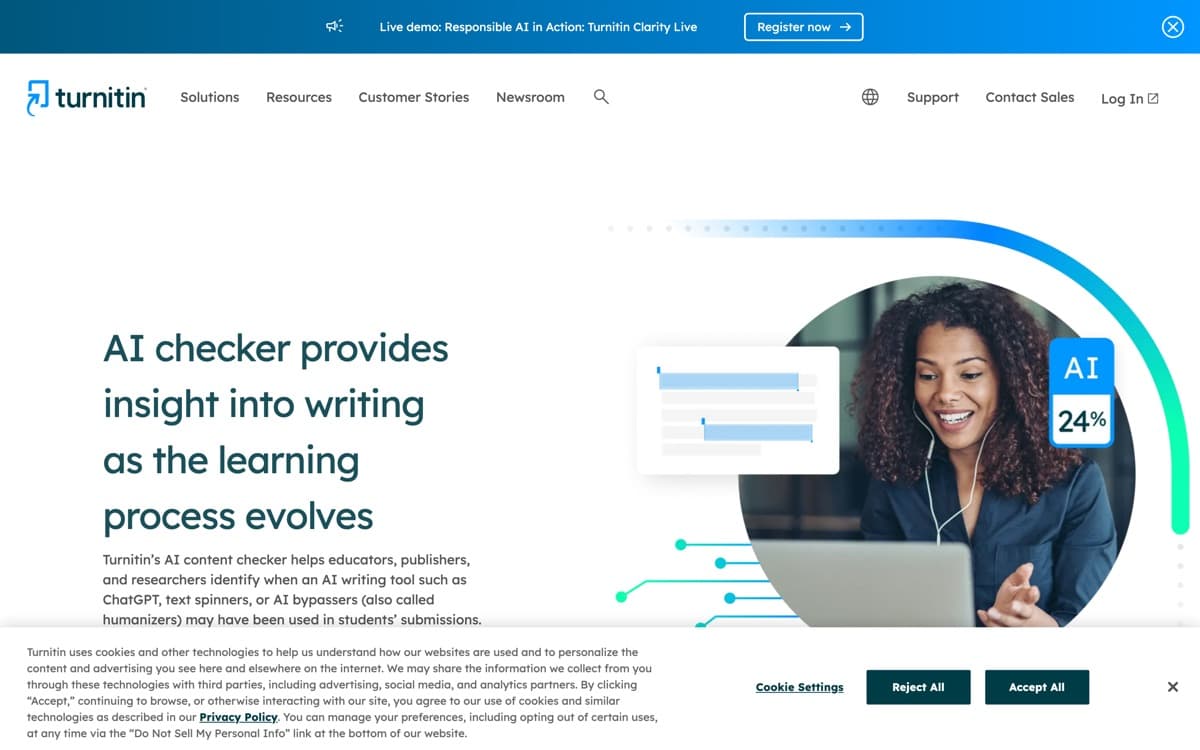
- AI score alongside similarity report in one submission view
- Improved calibration and paraphrase-detection after early false-positive era
- Governance layer: policies, audit trails, and appeals processes built in
- Handles the languages and volume of global higher ed
Cons
- Not available to individuals — institutional contracts only
- Accuracy still trails the specialist leaders in independent tests
- Early-2023 false-positive reputation lingers in student trust surveys
- Opaque pricing
Standout features
Workflow gravity
Inside Canvas/Moodle/Blackboard submission flows instructors already grade in — adoption without behavior change, which is why it persists regardless of benchmark horse-races.
Integrated integrity view
Similarity (plagiarism) and AI indicators in one report with flagged passages — a single triage surface for the whole originality question.
Institutional governance
Policy frameworks, documentation trails, and appeal-supporting evidence — the administrative scaffolding a fair process requires, which score-only tools leave to you.
Turnitin AI Detection pricing
Institutional licensing only, priced per student per year (commonly cited in the ~$3–5/student range for the integrity suite, varying by size and bundle). No individual or small-team tier exists — educators without institutional access should use GPTZero or Pangram.
For institutions already licensing Turnitin, the AI indicator is effectively bundled — which shapes the buy-vs-add decision more than benchmarks do.
Our verdict
Turnitin earns its place through reach, workflow, and a genuinely improved second act — not through leading accuracy. Institutions should run it as the embedded first pass, write policy that requires human process around every flag, and consider Pangram as the second-opinion layer for contested cases.
Skip it if: You're not an institution — individuals literally cannot buy it — or your integrity process can't absorb documented false-positive handling with human review at every step.
4.0 / 5 — #5 in AI Detectors 2026
Turnitin AI Detection: FAQ
How accurate is Turnitin's AI detection now?
Meaningfully better than its 2023 launch — improved calibration, banded scores, and paraphrase detection — but still behind specialist leaders like Pangram in independent testing. Its value is workflow and governance as much as raw accuracy.
Can students see their Turnitin AI score?
By default the AI indicator is instructor-facing; institutions configure visibility. Many now pair it with explicit policies on disclosure and appeal — ask your institution for its written policy.
Can individual teachers or writers buy Turnitin?
No — it's licensed institutionally. Individuals should use GPTZero (education workflow) or Pangram (accuracy) instead.
Related rankings: best AI chatbots · best AI image generators