

FLUX.2 Review (2026)
The open-weight frontier you can own
Top5Apps editorial · Last tested & updated September 10, 2026 · Reviewed under The Receipts Standard
Developer
Black Forest Labs
Free tier
Open weights (dev) free for research/non-commercial
Paid from
~$0.03/image via API
Platforms
API, Self-hosted, ComfyUI, Partner apps
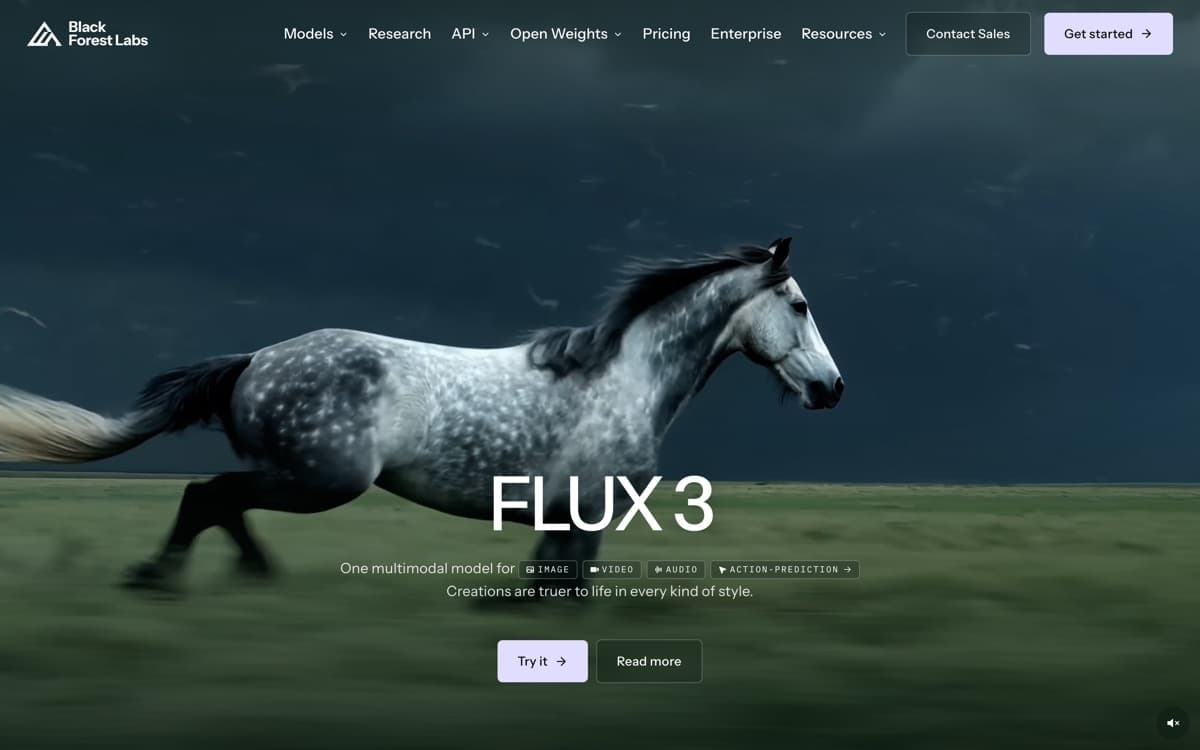
What is FLUX.2?
Black Forest Labs — founded by the researchers behind the original Stable Diffusion — kept the open-model flame alive while the industry went closed, and FLUX.2 is the payoff: an open-weight family that trades blows with the closed frontier. Photorealistic people without the uncanny sheen, strong typography, multi-image reference support, and editing that holds character identity. It's the model behind the scenes of countless AI products (including Grok's image features and half the startups on this page's 'also considered' lists).
The reason FLUX.2 matters is control. Weights on your hardware mean no rate limits, no content-policy surprises inside your legal rights, no per-seat pricing, and fine-tuning on your own product catalog or art style via LoRA. Studios build brand-consistent pipelines in ComfyUI; developers ship features on the API at pennies per image — Envato's stock platform alone has generated 51 million images on FLUX models, about a quarter of its total generation volume, and the FLUX.2-dev weights pull nearly a million Hugging Face downloads a month as of August 2026. It demands more assembly than anything else here — that's the trade, and for technical teams it's a good one.
FLUX.2: pros and cons
Pros
- Frontier-class quality with weights you can download and fine-tune
- Photoreal people and products with excellent prompt adherence
- Multi-reference editing rivals the closed labs' best
- Full ecosystem: ComfyUI, LoRA fine-tunes, every GPU cloud
- No subscription — pay per image or run it on your own hardware
Cons
- No polished first-party consumer app — you assemble your own stack
- Full-quality local runs want a serious GPU (or quantized variants)
- Commercial use of open weights requires reading license terms carefully
Standout features
Open weights
Download FLUX.2 [dev], run it locally or on rented GPUs, fine-tune it on your own imagery. Your pipeline, your rules, your costs — the only frontier-quality model offering that freedom in 2026.
Production-grade editing & references
Feed multiple reference images — product, model, setting — and get composites with held identity, plus inpainting-quality local edits. Open tooling used to lag closed labs here; FLUX.2 closed the gap.
The ComfyUI ecosystem
Node-based workflows, community LoRAs, ControlNets, and upscalers turn FLUX into a customizable factory. Whatever niche control you need, someone's already built the node.
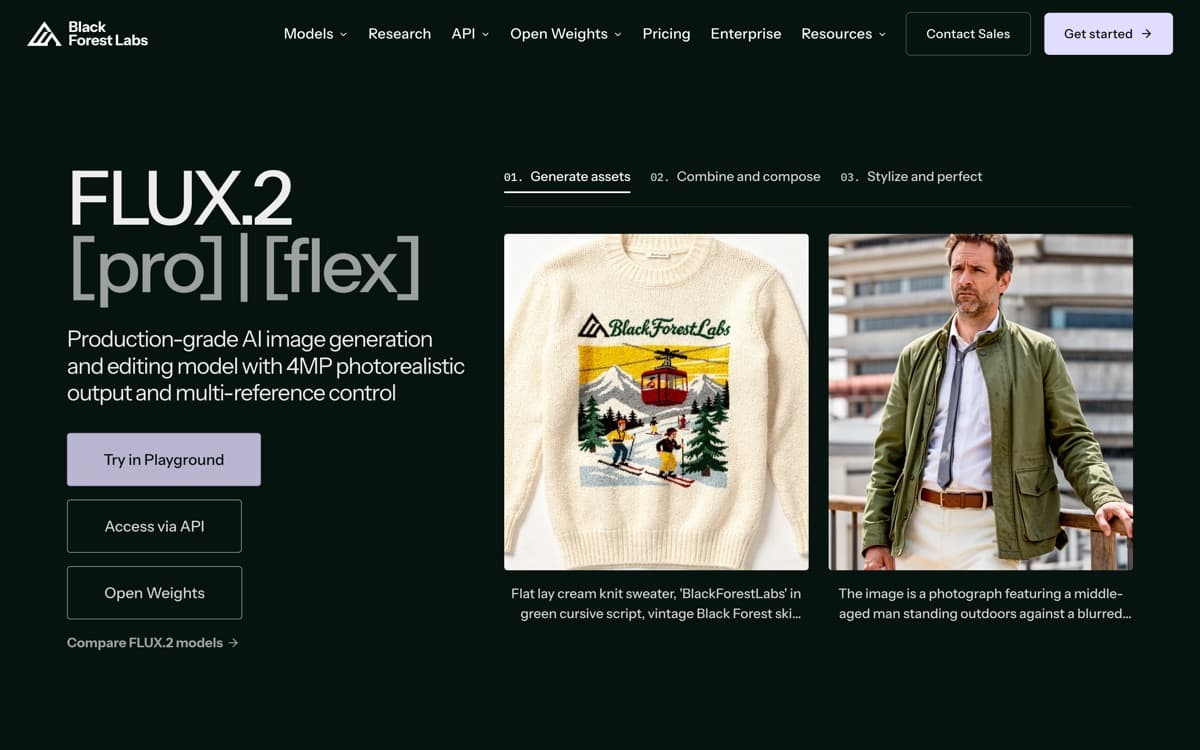
FLUX.2 pricing
FLUX.2 [dev] weights are free for research and non-commercial use (commercial licensing available); FLUX.2 [pro] tiers run through the BFL API and partners at roughly $0.03–0.06 per image depending on size and variant. No subscriptions anywhere.
Practical math: heavy generators come out far ahead of $20–30/month subscriptions, and self-hosters trade GPU cost for unlimited volume. Krea, Freepik, Replicate, and fal all offer hosted FLUX if you want a UI without the setup.
Our verdict
FLUX.2 is the pick for developers, studios, and tinkerers who want frontier images on their own terms — and the insurance policy that keeps the closed labs honest. If you just want to type and get pictures, use Nano Banana Pro; if you want to build with images, build on FLUX.
Skip it if: Nobody on the team enjoys assembling pipelines — FLUX's power assumes ComfyUI or API comfort that has nothing to do with prompting skill. Type-and-get-pictures people belong with Nano Banana.
4.5 / 5 — #4 in AI Image Generators 2026
FLUX.2: FAQ
Is FLUX.2 really free?
The [dev] open weights are free for research and personal use; commercial deployment needs a license or the paid API (~$0.03+/image). Hosted partners like Krea and Freepik include FLUX in their subscriptions.
What GPU do I need to run FLUX.2 locally?
Comfortable full-precision runs want 24GB+ of VRAM, but quantized builds run well on 12–16GB consumer cards with modest quality trade-offs. Cloud GPUs by the hour are the common middle path.
FLUX vs Stable Diffusion?
FLUX is the spiritual successor — same founding researchers, dramatically better quality. Stable Diffusion 3.5 retains a huge legacy ecosystem, but for new open-model projects in 2026, FLUX.2 is the default choice.
Related rankings: best AI video generators · best AI chatbots · best AI detectors