
Hume AI Review (2026)
Voices with genuine emotional intelligence
Top5Apps editorial · Last tested & updated September 10, 2026 · Reviewed under The Receipts Standard
Developer
Hume AI
Free tier
Yes — monthly credits
Paid from
$10/mo
Platforms
Web, API, iOS
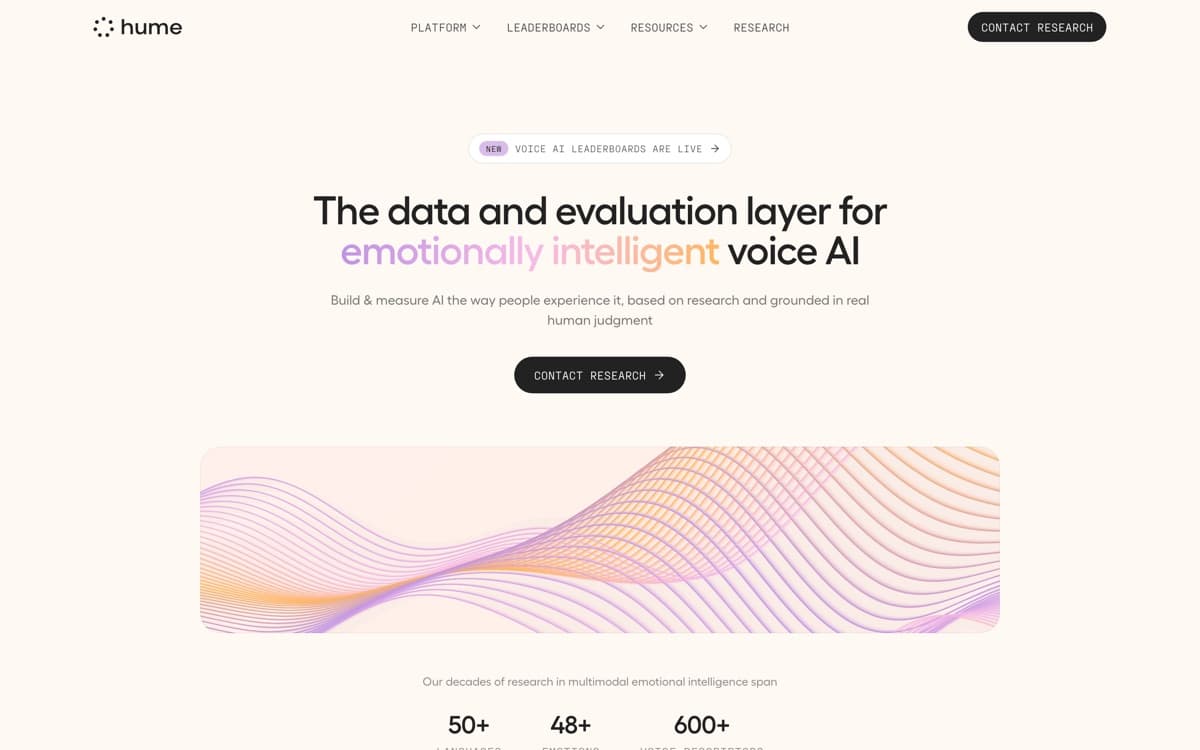
What is Hume AI?
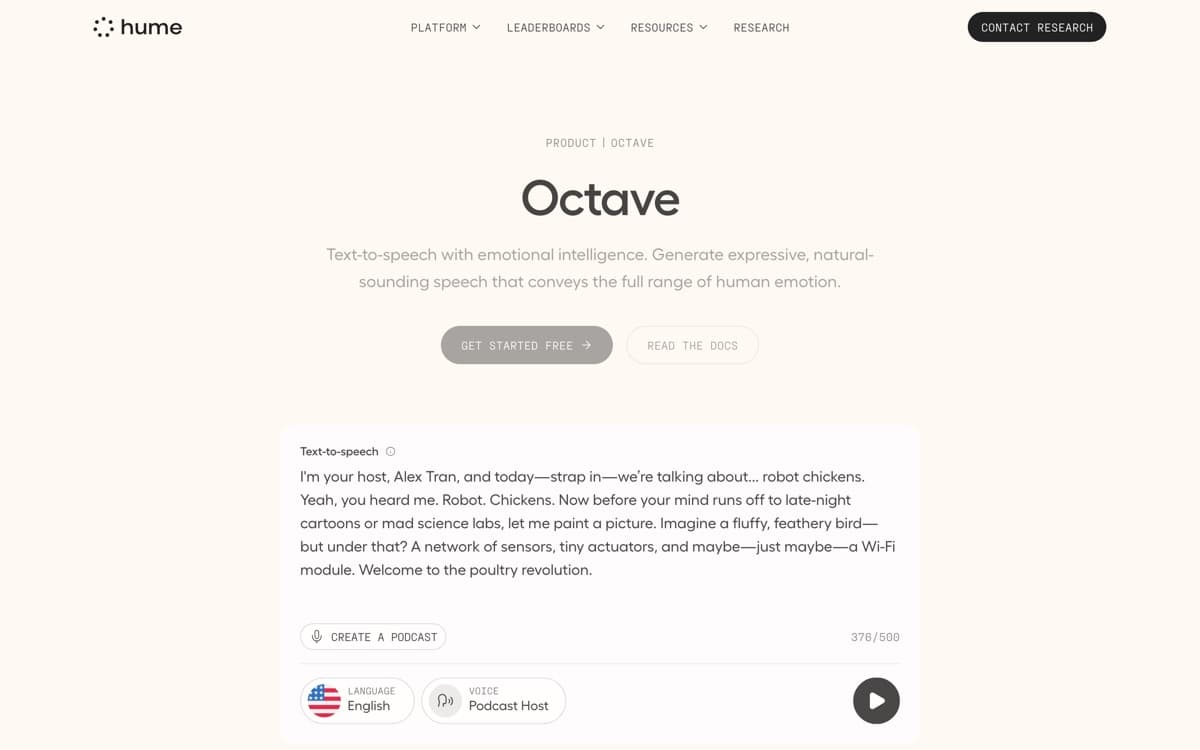
Hume began as an emotion-science research lab, and it built the only voice AI that genuinely understands feeling in both directions. Octave 2, its speech model, doesn't read text — it interprets it, choosing pacing, tension, and warmth from narrative context like a director-noted actor. Give it a fight scene and voices tighten; give it a lullaby and they soften. For fiction, games, and character work, its output is the most alive in the industry.
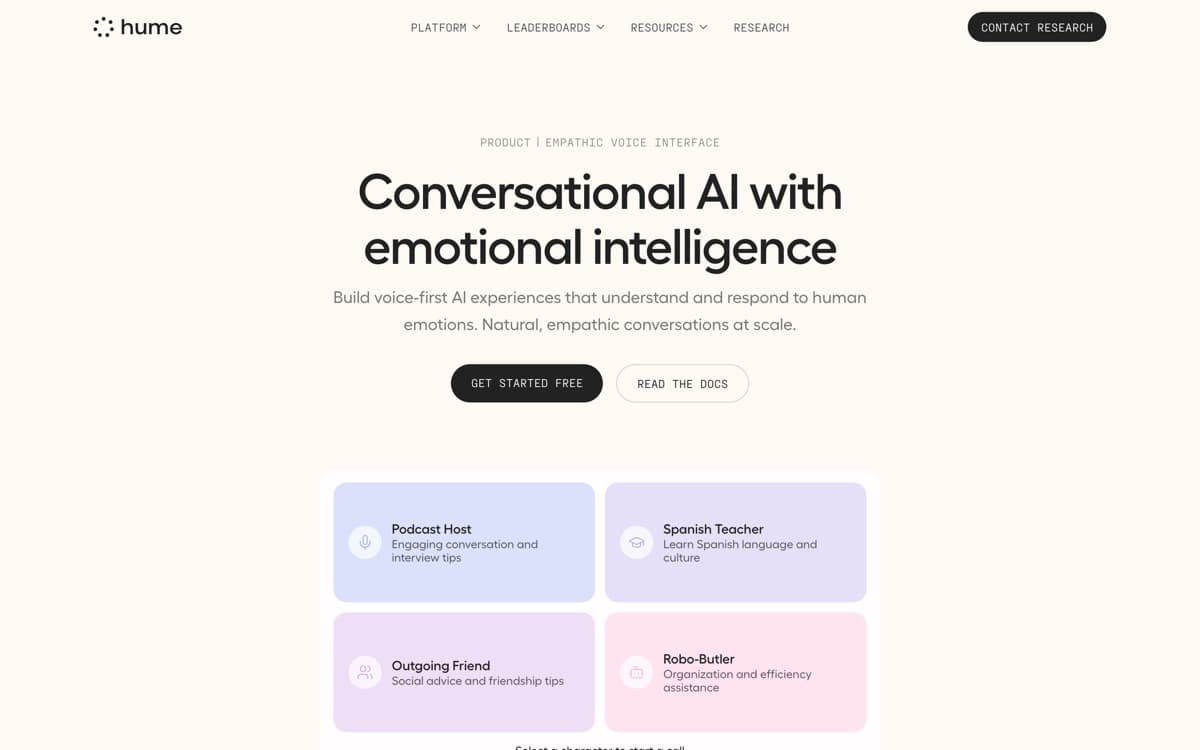
The other half is EVI, Hume's empathic conversational voice interface: it hears the frustration, hesitation, or delight in a caller's voice and adjusts its response in real time. Support lines built on EVI de-escalate better; companion and coaching apps feel uncannily attentive. Voice design is the party trick that sells it — describe any voice in a sentence and Octave conjures it, no casting or cloning required. It's a more specialized tool than ElevenLabs, but within its specialty, it's untouchable.
Hume AI: pros and cons
Pros
- Octave 2 acts scripts with emotional nuance no rival matches
- Describe a voice in words — 'weary detective, light rasp' — and it exists
- EVI conversational agents respond to *how* users sound, not just what they say
- Voice design from prompts is a superpower for fiction and games
- Research-grounded approach to emotion that isn't marketing fluff
Cons
- Smaller voice library and language coverage than ElevenLabs
- Developer-first: content-creator tooling is thinner
- Long-form production workflow requires more assembly
Standout features
Octave 2's contextual acting
The model reads the scene, not just the sentence — sarcasm lands, grief weighs, excitement builds across paragraphs. Audiobook narrators tell us it's the first TTS they consider a peer.
Voice design by description
'A patient kindergarten teacher with a slight southern lilt' — typed, generated, done. Infinite original casts for games and fiction with zero consent complexity.
Empathic voice agents (EVI)
Agents that perceive vocal emotion and respond appropriately — measurably better containment and satisfaction in support deployments than tone-deaf alternatives.
Hume AI pricing
Free credits cover evaluation. Creator plans start around $10/month for TTS use; usage-based API pricing (per character for Octave, per minute for EVI) scales with deployments, with committed-use discounts for production apps.
For pure content creation, ElevenLabs' tiers are simpler; Hume's pricing shines for interactive applications where its per-minute conversational rates are competitive with the big platforms.
Our verdict
Hume is the artist's and builder's choice for emotional realism — the best acting in TTS and the most human conversational agents. It gives up breadth (languages, dubbing, library size) to ElevenLabs; it gives up nothing in feeling. For character-driven work, start here.
Skip it if: You need seventy languages, dubbing, or studio tooling — breadth is ElevenLabs' game. Hume trades width for emotional depth, and that trade should match your work.
4.5 / 5 — #3 in AI Voice Generators 2026
Hume AI: FAQ
What makes Hume different from other TTS tools?
Emotional intelligence: Octave 2 interprets scripts contextually like an actor, and EVI agents perceive and respond to users' vocal emotion in real time. It's the specialist for feeling, versus generalists that optimize clarity.
Can Hume clone voices?
Hume emphasizes voice design — generating original voices from text descriptions — which sidesteps most cloning consent issues entirely. Custom voice work is available for enterprise.
Is Hume good for audiobooks?
For expressive fiction, it's arguably the best narration model available. Expect to assemble more of the long-form workflow (chapters, pronunciation, mastering) than in ElevenLabs' studio tools.
Related rankings: best AI audio tools · best AI video generators · best AI dictation