
Guides
How to Become an OpenAI Field Rep: How to Join OpenWorks, Who Qualifies, What It Pays and What the Application Asks
By the Top5Apps editorial team · Published November 24, 2026 · Updated November 24, 2026 · 8 min read
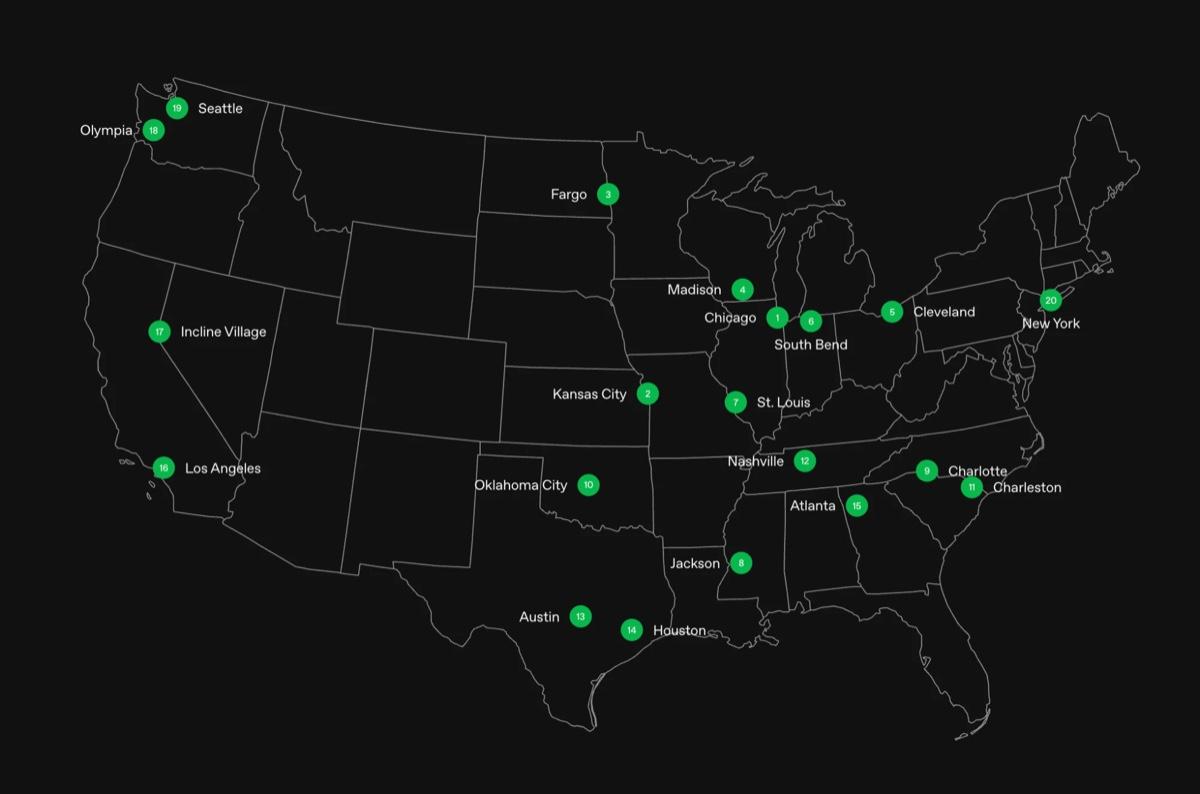
OpenAI launched a program called OpenWorks on November 23, 2026. It pays local AI experts to sit down with small business owners, in person, and help them put AI to work. OpenAI's announcement says: 'we fund local AI experts to help small businesses develop the tools and skills they need to grow their own business, at no cost to them.'
To join, you fill out one form on OpenAI's OpenWorks page and wait for an email. The role is called an OpenWorks Partner. Partners are contractors, the stipend is up to $8,000 a month, and the minimum commitment is four full days a month with local businesses plus one monthly workshop. The pilot runs in 20 U.S. cities, and OpenAI says you can apply from anywhere in the country.
The $8,000 figure spread fast after Polymarket posted it, and that post had about 2.7 million views a day later. The details matter more than the headline number, so this guide walks through the requirements, the form and the fine print.
What is OpenWorks?
OpenWorks is a pilot that connects two groups. Partners are people or small teams who know AI well and want to teach it. Small businesses are independently owned U.S. companies such as restaurants, shops, service firms and manufacturers. OpenAI pays the partner, and the business pays nothing.
OpenAI's page describes the work as projects the owner chooses: 'You might help a business reach new customers, launch an ad campaign, or build a tool their team can keep using on its own.'
People are calling the role a field rep, and that is a fair description of the job. OpenAI's own term is OpenWorks Partner. Its Help Center article is plain about the legal status: 'OpenWorks partners are contractors.' You wouldn't be an OpenAI employee.
The pilot was running before the public launch. OpenAI's page features four case studies, including an inventory dashboard for a gift shop in Fargo, North Dakota. Jake Ottiger, who is named as the partner in two of them, wrote that he joined OpenAI two months ago, and he now describes himself as 'the OpenWorks guy.'
Who can become an OpenWorks Partner?
OpenAI says it wants 'technically skilled and curious individuals and small teams committed to helping local businesses thrive.' It adds that 'software and AI consultancies are encouraged to apply alongside their existing client work.'
The application form names three qualities:
- You are technically capable. The form asks for 'the technical skills to build practical solutions to real-world problems.'
- You are collaborative and practical. The form says 'you listen first, communicate clearly,' and can turn an owner's needs into something approachable.
- You are community-oriented. OpenAI wants people who are 'eager to put your skills to work locally.'
The Help Center fills in the practical rules:
| Question | Answer from OpenAI |
|---|---|
| Do I need a degree? | No. The form lists no degree requirement |
| Do I need a company? | No. If you have no LLC or corporation, enter N/A in the company field |
| Can I use a personal email? | Yes |
| Is there a deadline? | No deadline is listed |
| Can I work remotely? | Not yet. OpenAI prefers partners who work in person |
| Can I apply from outside the U.S.? | Not yet. The pilot is for work with small businesses in the U.S. |
| Does my city have to be on the list? | No. You can apply to express interest, and OpenAI makes no promise to launch there |
Which cities are in the pilot?
OpenAI's map, shown at the top of this guide, marks 20 communities where partners are already working.
- Midwest: Chicago, Kansas City, Fargo, Madison, Cleveland, South Bend and St. Louis.
- South: Jackson, Charlotte, Oklahoma City, Charleston, Nashville, Austin, Houston and Atlanta.
- West: Los Angeles, Incline Village, Olympia and Seattle.
- Northeast: New York.
If your town isn't listed, OpenAI still wants to hear from you. Its page says: 'Sign up to bring OpenWorks to your hometown.'
How do you apply, step by step?
The whole application is one web form. We read every field on November 24.
Step 1: Open the partner form
Go to the partner application. The OpenWorks page has three forms, and the other two are for businesses that want help and for nominating someone else.
Step 2: Enter your details and location
The form asks for your name, email, company or practice name, city and state. It then asks: 'Can you work in person in this city/state?' If you answer no, you can say where you could help in person.
Step 3: Answer the main question with a real example
This is the question that carries the application: 'Tell us about a real problem you used AI to solve or helped someone else solve. What did you do, and what changed?' OpenAI says an example from your own work, a client project or a community project is fine.
Our advice is to pick one small, concrete job and give the before and after in numbers. OpenAI's own case studies follow that shape. One says a price check that 'once took hours' now takes 15 to 20 minutes.
Step 4: Tick your areas of experience
The form lists ten areas and lets you select all that apply: AI-powered research and analysis, workflow automation, software development and coding, building AI-powered tools and applications, sales, marketing and social media, business operations, data analysis and reporting, AI education and training, and other.
Step 5: Describe your first community day
An optional question asks who you would work with on your first day and what you would do together. OpenAI says a type of business or nonprofit is enough and that no client names are needed.
Step 6: Answer the commitment question
The form asks: 'Can you commit four full days per month to providing free, hands-on AI help to local small businesses, plus one monthly workshop?' The three answers are Yes, Not yet, and I'd need to learn more. The Help Center suggests the third answer if you want more information before you commit.
Step 7: Add one link and submit
You must add one link to a social profile or portfolio, such as LinkedIn or X. A website and one or two client testimonials are optional. Then you press Submit.
Step 8: Save a copy and wait
OpenAI doesn't send a confirmation email. The Help Center says: 'The message you see on screen after submitting the form is your confirmation.' The team emails you only if it decides to move forward. The article also warns that the confirmation page 'may say nomination even after a partner application.'
You can't edit an application after you send it. The Help Center says there is 'no published way to update your application yet' and asks people to keep a copy and to hold off on submitting again. A dedicated inbox, openworks@openai.com, isn't open yet.
What does it pay, and what does it ask of you?
The stipend is 'up to $8,000' a month, and OpenAI hasn't explained the 'up to.' The Help Center says the program page 'doesn't specify how the amount is calculated or how long it's paid.'
| What OpenAI has said | What it hasn't said | |
|---|---|---|
| Pay | A monthly stipend of up to $8,000 | How the amount is set, and for how many months |
| Time | Four full days a month with businesses, plus one monthly workshop, at a minimum | How many businesses you serve, and who finds them |
| Status | Partners are contractors | Contract terms, expenses, and who owns what you build |
| Support | Tools, resources, workshop support and a partner community | Which tools, and whether paid ChatGPT access is included for partners |
| Location | In person, in the U.S. | When remote work or other countries might open |
Here is our own arithmetic on the top figure. Four full days plus one workshop is about five working days, if the workshop takes a day. At the $8,000 maximum, that comes to roughly $1,600 a day. The actual amount could be lower, and the Help Center calls four days a minimum.
Contractor status has costs that the headline number hides. In the United States, a contractor usually pays their own taxes and gets no benefits from the client. OpenAI hasn't published its contract, so ask about both before you sign.
How does a small business get the free help?
A business owner fills out the business form. It asks for the business name, industry, city, state and your role. Everything else is optional, including the one task you'd like help with.
OpenAI says a business gets one-on-one support from a partner, hands-on practice 'using the tools you already work with,' and three months of ChatGPT Business at no cost. OpenAI's pricing page lists a Standard seat at $25 a month when billed monthly, so that is about $75 per seat. OpenAI doesn't say how many seats a business receives.
Some businesses are excluded. OpenAI's page says 'software and SaaS companies, venture-backed businesses, and private equity-owned businesses are not eligible.' Nonprofits and faith-based organizations can apply, according to the Help Center.
The form asks whether your project involves sensitive data, such as health records or payment card details. It tells you to tick the categories and to leave the actual records out of the form.
The product behind the program
Know the tool before you apply
- 01
 ChatGPT4.9
#1 in AI Chatbots
OpenWorks projects run on ChatGPT, and OpenAI's case studies also mention Codex. A partner teaches it and a business receives three months of the Business plan, so both sides should know its limits and its paid tiers first.
OpenAI doesn't say what happens to the seats after three months, so ask before you build your work around them.
Read our ChatGPT review →
Should you apply?
If you already help local businesses with AI, this looks like a paid part-time contract with OpenAI as the client. That is our reading of the terms. The page invites consultancies to apply 'alongside their existing client work,' which means OpenAI expects you to keep your other clients.
Three points are worth thinking through before you send the form.
- The work is in person. Four full days a month on site is a real block of time. It suits someone who already lives in one of the 20 communities or wants to start one.
- Your usual clients may not qualify. Software companies and investor-backed firms are excluded. OpenWorks days go to restaurants, shops, trades and similar businesses.
- The program teaches OpenAI's products. OpenAI's case studies all use ChatGPT or Codex. If you normally recommend a mix of tools, ask whether you can keep doing that on OpenWorks days.
We would ask OpenAI six questions before signing: how the stipend is calculated, how long it lasts, whether travel and expenses are covered, who owns the tools you build for a business, whether you can recommend other companies' products, and who is responsible if a project touches sensitive data. OpenAI hasn't answered these in public.
What we still don't know
- OpenAI hasn't said how the stipend is calculated or how long it runs. Its own Help Center says so.
- OpenAI hasn't said how many partners it will accept. The pages give no number and no selection timeline.
- The contract isn't public. Terms on expenses, ownership and exclusivity will matter more than the headline figure.
- Nobody outside the pilot has described the selection process. The form says the team emails applicants it wants to move forward with.
- There is no date for remote work or other countries. The Help Center answers both with 'Not yet.'
The short answers
- How do you become an OpenAI field rep? You apply to be an OpenWorks Partner through one form on OpenAI's site. The role is a contract position.
- What does OpenWorks pay? It pays a stipend of up to $8,000 a month. OpenAI hasn't said how the amount is set.
- How much time does it take? The minimum is four full days a month with local businesses, plus one monthly workshop.
- Where is it available? The pilot is live in 20 U.S. communities, and people elsewhere in the U.S. can apply to express interest.
- Can a small business get help for free? Yes, if it is independently owned and in the U.S. Software companies and investor-backed businesses are excluded.
We'll update this guide when OpenAI opens the OpenWorks inbox, publishes the stipend terms or adds cities.
Where these apps rank