
Guides
How Did They Make the NUREMBERG AI Trailer? The Tool Its Maker Named, Our Shot Count, the 1915 Voice Track, and Why Trailers Suit AI Video
By the Top5Apps editorial team · Published November 16, 2026 · Updated November 16, 2026 · 16 min read
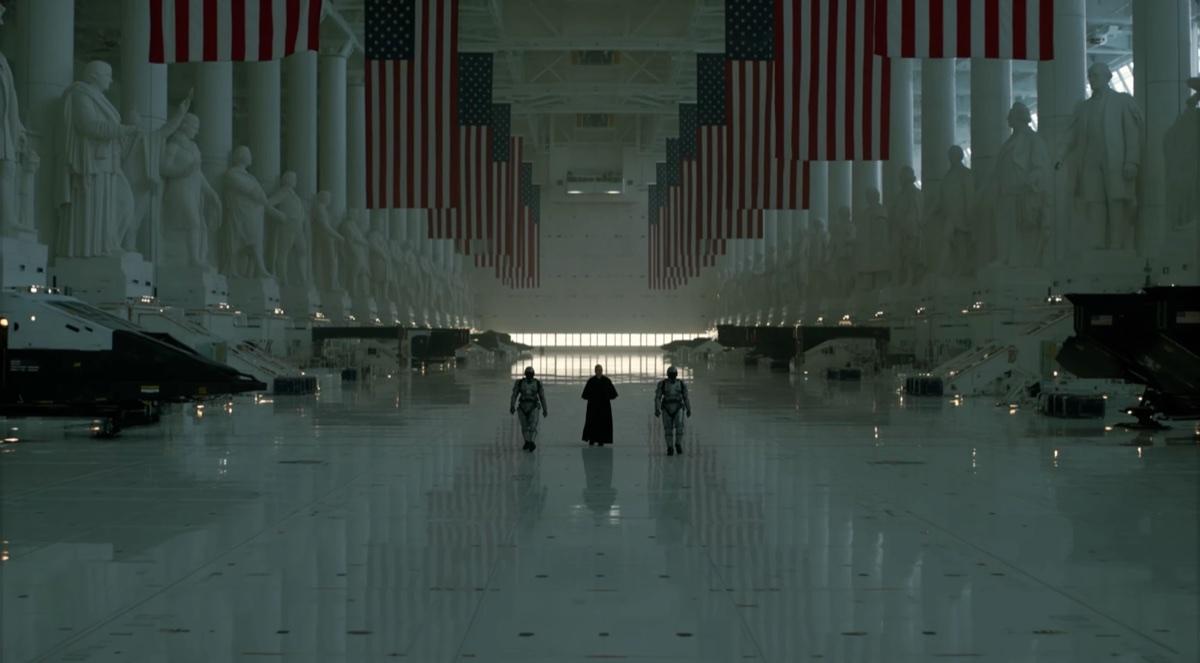
Short answer: one person generated dozens of short AI video clips and cut 59 of them to a 1915 recording of a Kipling poem. The maker, who posts as TUPACABRA, says the video was generated on Venice, an app that resells other companies' video models. He hasn't named the model, the time it took or the cost. The trailer is built from short, silent shots. More than half of them last a second or less, the longest runs five seconds, and nobody speaks on screen. Those are the conditions in which today's AI video tools look their best.
NUREMBERG is an 86.6-second trailer for a film that doesn't exist yet. It had 29.2 million views on X when we checked on November 16, 2026, three days after it went up. We verified the post and the maker's replies, cut the video into shots, matched its voice track against a Library of Congress recording, and checked the history it borrows against museum, library and academic sources. We haven't made a trailer with this method ourselves.
The short version
- The maker named one tool. He replied to his own post: 'Videos generated with @AskVenice.' Venice lists 68 video models from other companies, and he hasn't said which one he used.
- Venice promoted the trailer within minutes. Its founder quote-posted it 11 minutes after that reply, and the company cut prices 'in honor of' the maker. Neither side has said whether he received free credits.
- It's 59 shots in 87 seconds. The median shot lasts 1.0 second and the longest lasts 5.0 seconds, by our count.
- Nobody speaks on screen. The only voice is a recitation recorded in 1915, which is in the US public domain.
- The pace is normal for a trailer. Academic counts put modern trailers at about 1.4 seconds a shot and modern feature films at about 4.
- The history is part record and part myth. The 1561 broadsheet, Operation Highjump and the flying wing are real. The secret Antarctic base is a conspiracy story that historians have examined and rejected.
- The feature film is the maker's claim. He says it's 'really in production' and has given no length, date or team.
What NUREMBERG is, and who made it
The post went up on X at 1:41 pm Pacific time on Friday, November 13, 2026. Its whole caption is 'NUREMBERG - Official Trailer.' The video runs 86.6 seconds. When we checked on the morning of November 16 it showed 29.2 million views, 126,000 likes and about 13,600 reposts, from an account with about 160,000 followers.
The account belongs to a creator who posts as TUPACABRA. His profile reads 'UFO RESEARCH & MEDIA,' and he hasn't published his name there, so we use the handle. He has written that he used to direct music videos with a camera and stopped when he saw how much of the work could be automated. His earlier AI videos include one called RIP CITY, which has 4.3 million views.
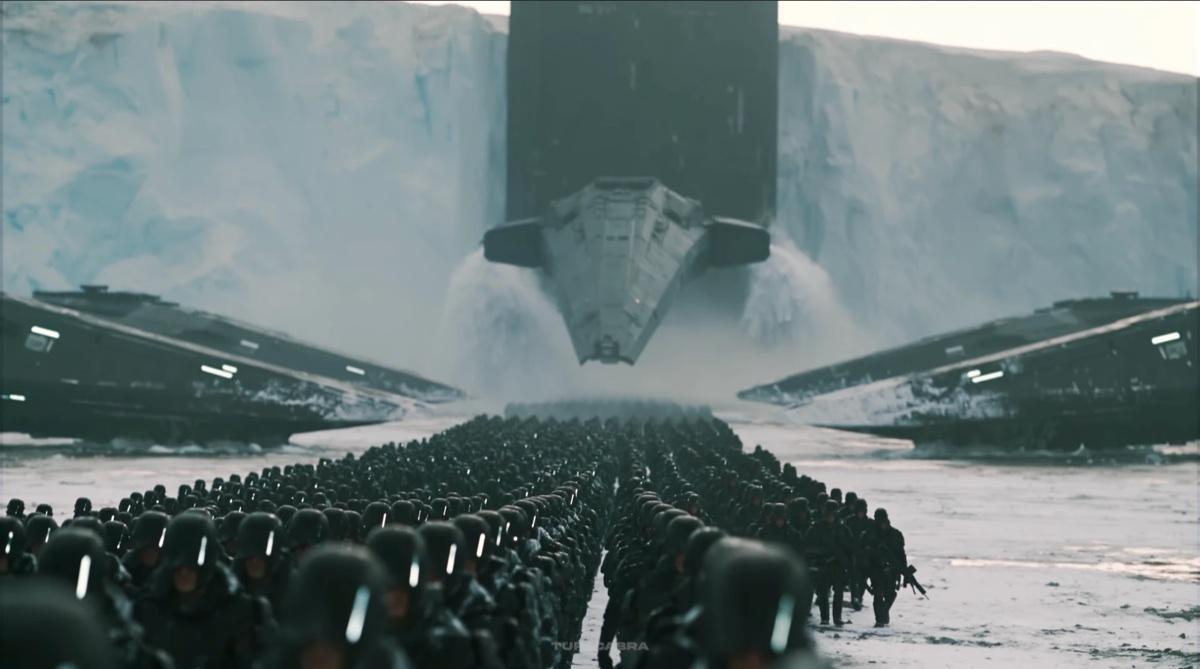
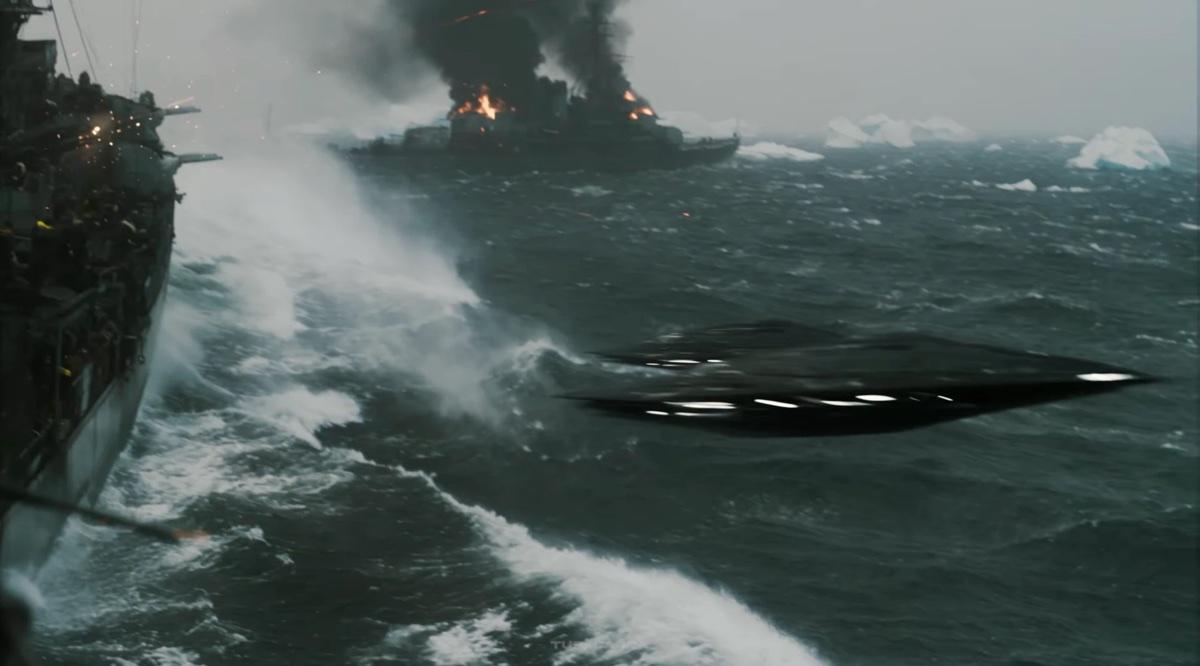
The trailer tells its story in pictures. It opens on a modern city under attack and cuts to farm workers outside an old walled city. A court in Tudor dress gathers around a glowing ring. Soldiers in steel helmets stand before a larger ring. An American fleet meets flying craft at an ice wall. The title arrives at 1 minute 13 seconds, and the last shot returns to the court by candlelight.
The trailer is the third public cut of this project. He posted about the 1561 event in February, then a 35-second clip titled NUREMBERG 1561 AD on September 24, which has 3 million views, and a 113-second cut titled NUREMBERG on September 30, which has 2.25 million. In early November he called that video 'just a sample of the world I've built.' The clip that reached 29 million views came after about two months of public drafts.
Is the film real?
The maker says it will be. On the evening of November 14 he wrote: 'I am the sole creator of this project and no one else represents NUREMBERG,' and 'YES this is really in production.' He has given no running time, release date, budget or team. Figures you may have seen, such as 135 minutes and a 2027 release, came from an account he publicly disowned.
One viral report was false by his own account. Two large accounts posted that a casino company's chief executive had offered him an unlimited credit line to make the film. He replied: 'Fakest news I've ever seen.' The first of those posts now carries a Community Note saying the same.
What the maker has said about how he made it
He has said one thing. Two hours and 14 minutes after the trailer went up, he replied to his own post: 'Videos generated with @AskVenice.' He repeated the credit on November 16 under the 4K upload.
TUPACABRA@tupacabra
Videos generated with @AskVenice.
View original post ↗
Venice is an app and API that sells access to other companies' AI models. It doesn't make a video model of its own. Its model library listed 68 video models when we checked, including Seedance 2.5 from ByteDance, Kling 4.0, Wan 3.0, Google's Veo 3.1, Runway Gen-4.5 and MiniMax H3. The credit tells you where he generated the clips. It doesn't tell you which model drew them.
Nobody has confirmed the model. Venice's own vice president of marketing was asked and answered that he was 'not sure of the model actually,' and added: 'I assume Seedance 2.5.' That is a guess from a Venice employee. The maker did mention running a shot in 'Seedance 2.5 1080' in October, in a post that wasn't about this trailer.
Here is everything he hasn't said, as of November 16:
- The video model or models. Venice offers dozens, and he has named several different tools for earlier work: 'A combo of krea, midjourney, Kling, seedance, and others.'
- How the still images were made, if he started from stills.
- How long it took, what it cost, or how many clips he generated. Many replies ask. We searched his posts since November 13 and found no answer.
- Where the music and sound effects came from. We identified the voice ourselves, and that's covered below.
- How the 4K version was made. The YouTube file is 3,840 pixels wide. Venice lists an upscaling tool, and he hasn't said whether he used it.
Venice's part in the spread
Venice promoted the trailer fast, and readers should know that when they see the company's name attached to it.
- The founder posted within minutes. Erik Voorhees, who founded Venice and has nearly a million followers, quote-posted the trailer with 'Made with @AskVenice' 11 minutes after the maker's credit.
- The company account joined in. Venice replied 'Pure cinema' under the trailer the next morning.
- Venice cut its prices in his name. Jesse Proudman, Venice's president and chief technology officer, wrote on November 14: 'In honor of @tupacabra, we've lowered prices on top video models for the weekend.' Venice's filmmakers page showed 30% to 35% off four model families when we checked.
- Venice says it paid off. Its head of creative posted on November 16 that the company had 'the highest daily video gens ever.' That's Venice's own claim, with no figure attached.
We found no disclosed sponsorship. Neither side has said whether the maker received free credits or payment, before or after. A Venice executive offered credits to filmmakers in the replies under the trailer, and the maker had traded replies with Venice's head of creative the day before he posted it. The fact that Venice's marketing chief didn't know which model he used suggests the trailer wasn't a planned campaign. That last point is our inference.
What we found when we cut it into shots
We downloaded the video from the post, ran automatic cut detection, and checked every cut by eye against frames taken four times a second. These are our counts.
- 59 shots in 86.6 seconds. A title card and an end card with the maker's logo account for the rest.
- The median shot lasts 1.0 second. The average is 1.4 seconds.
- 31 of the 59 shots last a second or less. 50 of them last two seconds or less.
- The longest shot lasts 5.0 seconds. It's the final one, a slow look across the candlelit court.
- Only three shots run past three seconds. All three come in the last 25 seconds.
- Nobody speaks on screen. No shot asks a face to deliver a line in sync with a voice.
The pace changes on purpose. The first 30 seconds hold 26 shots at an average of 1.2 seconds each. The last 27 seconds hold 11 shots at an average of 2.2 seconds. The trailer starts fast, then slows down for its title and its two closing images. Studio trailers are built the same way.
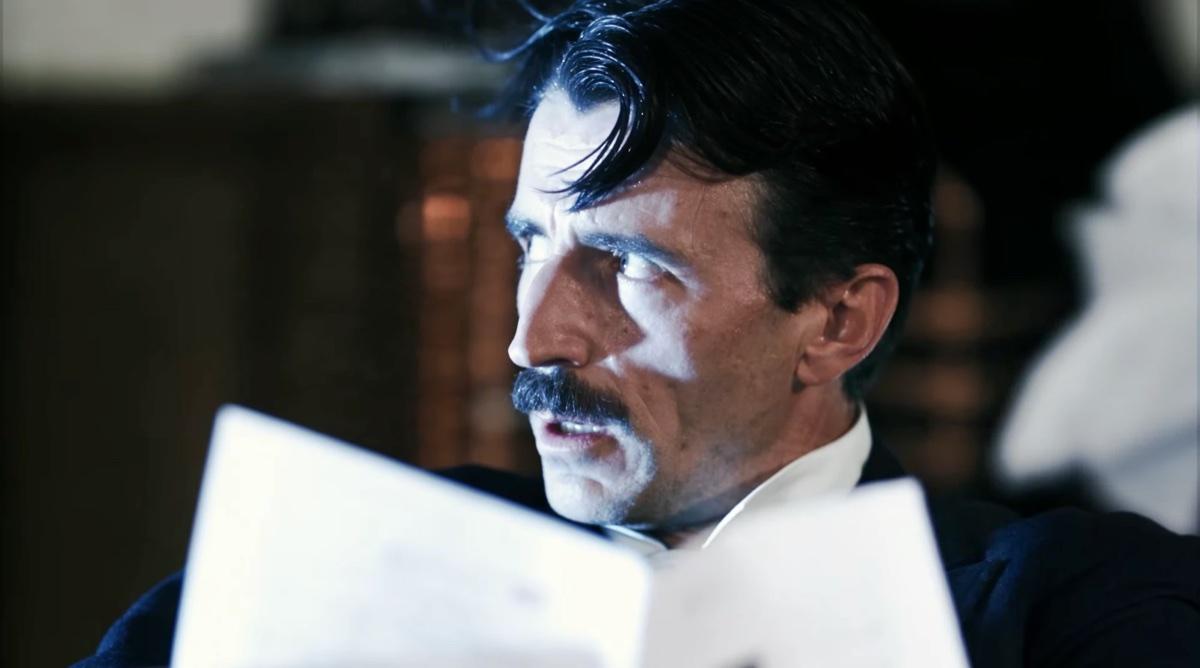
Two people get close-ups, and both stay silent. A man with a mustache appears in close-up twice, for under a second each time, looking up from a sheet of paper. A woman with red hair and a ruff gets one close-up at 0:39. The faces give the trailer the feeling of a cast, and the story never needs either of them to talk.
The voice is a recording from 1915
The only voice in the trailer is a man reciting 'Boots,' a poem Rudyard Kipling published in 1903 about soldiers on a forced march. Viewers on X recognized the poem. We checked which recording it is.
It's the American actor Taylor Holmes, recorded for the Victor label on July 8, 1915. The Library of Congress hosts that recording in its National Jukebox. We compared the trailer's audio with the library's file by measuring how the loudness of each rises and falls over time. From 0:11 to 0:25 the two match at a correlation of 0.98 to 0.99, where 1.0 would be identical. The trailer plays the 1915 performance at its original speed and re-orders some of its lines.
That choice solves three problems at once.
- It supplies a human performance. Holmes's voice climbs from a flat chant toward panic over three minutes. No voice had to be generated.
- It sets the tempo. The poem is written to the rhythm of marching feet. We measured the strongest repeating pulse in the trailer's audio at 0.93 seconds, and 33 of the 59 shots last between 0.8 and 1.1 seconds. The picture changes on the beat of the poem.
- It's free to use in the United States. The Library of Congress notes that every recording published before 1923 entered the US public domain on January 1, 2022. Kipling published the poem in 1903 and died in 1936, so the text is out of copyright too. The library tells users to make their own legal check, and the rules differ outside the United States.
A studio used this recording first. The trailer for the film 28 Years Later was set to the same Holmes performance in December 2024, and Deadline reported that it became the most-watched horror trailer of that year, with 60.2 million views. The Guardian's reviewer wrote that the recording 'begins haunted, but gradually rises to a possessed roar.' NUREMBERG borrows a device that had already worked on a very large audience.
We could verify the voice. We couldn't verify the rest of the soundtrack. The maker hasn't said where the music and effects came from, and one critic's description of 'a human score' came with no source.
What's real in the story it tells
The trailer mixes documented events with old conspiracy stories and gives them the same visual weight. The maker presents the project as suppressed history. On November 15 he wrote that Hollywood 'can't be honest about history.' We checked the main pieces against museum, library and academic sources.
| What the trailer uses | What the record says |
|---|---|
| A sky event over Nuremberg in 1561 | A real printed sheet exists. Hans Glaser of Nuremberg printed a hand-colored woodcut about a dawn spectacle on April 14, 1561, and the Zentralbibliothek Zürich holds it in the public domain. The text describes red arcs across the sun and balls, crosses and rods that seemed to fight for about an hour, and it calls them a warning from God. We found no peer-reviewed study of the sighting. The Public Domain Review suggests a weather effect, 'possibly sundogs.' |
| A scholar in black and a queen in a ruff, gathered around a glowing ring | The trailer names nobody in these scenes, and we read the pair as John Dee and Elizabeth I. Dee was real. A 2021 paper in the journal Antiquity says he became the queen's 'scientific advisor and astrologer' in 1558 and later tried to speak with angels through mediums. The British Museum holds an obsidian mirror linked to him. The Dictionary of National Biography has him leaving England for Antwerp in about December 1562, and we found nothing that places him in Germany in 1561. |
| A spear at a crucifixion, and an officer leaning over a glass case | The regalia of the Holy Roman Empire, which include the Holy Lance, were moved from Vienna to Nuremberg in 1938 and returned in 1946. Vienna's Kunsthistorisches Museum dates the lance to the 8th century and describes it as Carolingian work. It can't be a Roman soldier's spear. |
| A US fleet at an ice wall, and a name tag reading R. E. BYRD USN | Operation Highjump was a real US Navy expedition to Antarctica in 1946 and 1947. The National Science Foundation counts more than 4,700 personnel and 13 ships. The tag points to Richard E. Byrd, the Navy officer and polar explorer. A 2007 study in the journal Polar Record found that Highjump was a training exercise for a possible Arctic war with the Soviet Union and that 'there was no secret wartime German base' in Antarctica. A German expedition did visit the continent in early 1939. |
| A flying wing with German markings | The Horten Ho 229 was a real aircraft. The Smithsonian's National Air and Space Museum holds the only surviving example and says the one powered prototype 'crashed after several test flights.' It never entered service. |
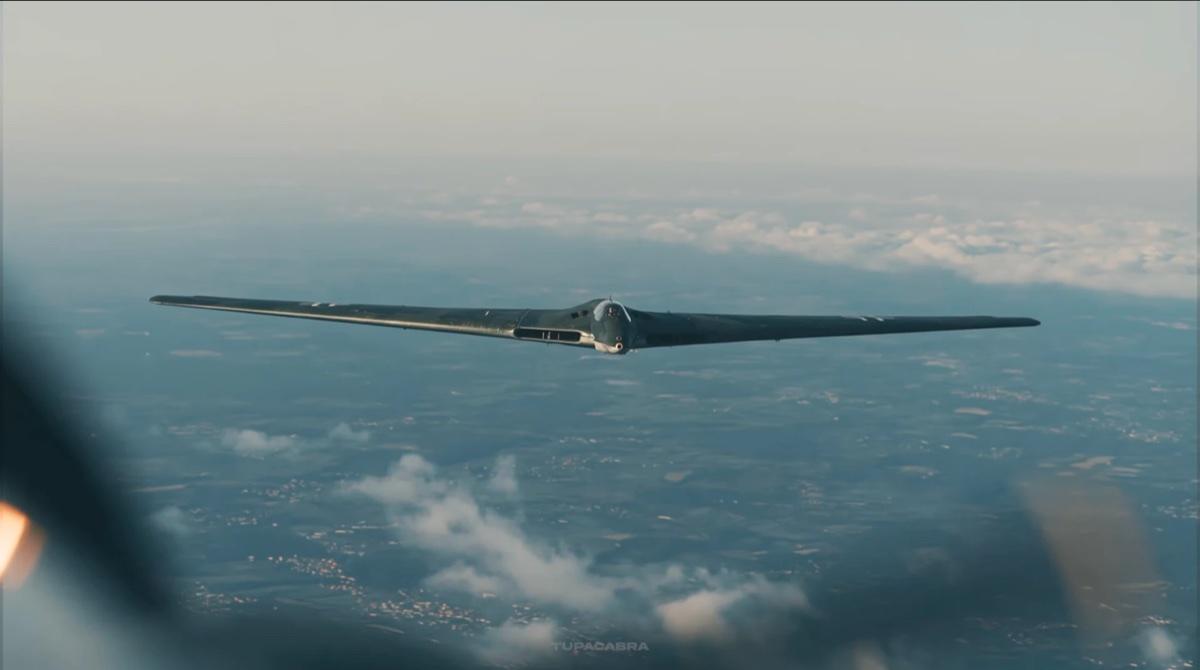
None of this makes the trailer a worse piece of filmmaking. Alternate history is an old genre. It does matter for how the clip travels, because several of these stories began as postwar myths about hidden Nazi survival, and a trailer that looks like a studio release can make them look like research.
Why a trailer suits AI video
A trailer asks an AI video model for the things it does well and skips the things it does badly. NUREMBERG shows that clearly, and its numbers match how human editors already cut trailers.
- Trailers are cut this fast by people. A 2016 Temple University master's thesis that measured 130 trailers found 'an average shot length of 1.37 seconds since the 2000s.' NUREMBERG averages 1.4 seconds.
- Feature films are cut about three times slower. A 2011 study of 160 Hollywood films put the average shot at below 4 seconds after 2000, and the film data analyst Stephen Follows found 'roughly one new shot every four seconds' across 8,770 films in October 2026.
- Trailer editors lead with sound. Bill Neil, an editor at the trailer house Buddha Jones, told The Ringer that trailers are 'much more style-driven' than films. The article says that for him 'the heart of the trailer is music and sound design.'
- A trailer needs no continuity. Each shot can show a new place, a new decade and a new face. The model never has to keep one actor looking the same across a scene.
- A trailer needs no dialogue scenes. A voice-over carries the words, so no generated mouth has to match them.
The usual complaint is that AI video 'can't hold a shot.' One widely shared post with that line was written about a different AI video published the same day, and at least one roundup attached it to NUREMBERG by mistake. Evan Schindler, who posts as @Panterra0x, made the point about this trailer directly. He wrote that it 'exposes the central problem with AI filmmaking right now: video models are much better at selling the promise of a feature than actually sustaining one.'
The vendors' own documentation complicates that complaint. The current models accept requests for much longer shots than this trailer uses, and several generate speech.
| Model | Longest single clip | Generates speech |
|---|---|---|
| Seedance 2.5 (ByteDance) | 30 seconds | Yes, with a syntax for dialogue |
| Kling 4.0 | 30 seconds | Yes, with lip sync |
| Wan 3.0 (Alibaba) | 30 seconds | Yes, including dialogue |
| MiniMax H3 | 15 seconds | It generates sound. Lip-synced dialogue isn't stated. |
| Gemini Omni 1.2 Flash (Google) | 15 seconds | Yes |
| Runway Gen-4.5 | 10 seconds | Not stated |
| Luma Ray3.2 | 10 seconds | No |
NUREMBERG's longest shot runs 5 seconds, which is a sixth of what three of these models accept in one request. The trailer doesn't show that AI video fails at long takes or at dialogue. It shows a maker who never needed either. Whether the same tools can carry a two-hour story with people talking to each other is the question the feature would have to answer, and this trailer gives no evidence in either direction.
Features are far behind trailers
Trailers were an early proof for AI video in general. In July 2023 Nicolas Neubert, who now works at Runway, posted a trailer called Genesis and published his numbers: 310 clips generated in Runway, 44 used, about seven hours of work.
Full-length AI films have reached cinemas only at the edges. The Hollywood Reporter described a Chinese release in October 2026 as 'the first longform AI film to get a true wide release,' and reported early ticket sales at about 12% of its budget. Critterz, an animated feature built on OpenAI's video tools, missed its planned Cannes debut after OpenAI shut Sora down.
How people reacted
- Jason Calacanis, the investor and podcast host, wrote: 'A trailer has crossed the uncanny valley for me.. for the first time.'
- Philip Cunliffe, who writes on political theory, wrote: 'all I see is incoherent slop.'
- Tyler Austin Harper, a staff writer at The Atlantic, wrote that critics of AI art 'will need to stop reflexively calling everything "slop"' and should object to it on principle.
How to make a trailer like this with your own material
The maker hasn't published his process, so these steps are our reconstruction from the finished video, from his statements about earlier projects and from the tools' documentation. We haven't made a trailer this way ourselves. The steps assume your own story and public-domain or licensed sound.
1. Start with the sound
Choose the audio before you make a single picture. You want a recording with a steady pulse and a rising intensity, and you need the right to use it. The Library of Congress's National Jukebox holds thousands of recordings from before 1923. NUREMBERG's whole edit follows its voice track, and that would be hard to add afterward.
2. Write one picture for every beat
Mark the pulse on a timeline and write a one-line shot for each mark. Ninety seconds at this pace needs about 60 lines. Group the lines into four to six settings, and give each setting one fixed description of its light, lens and color. NUREMBERG moves between a Tudor court, wartime Germany, Antarctica and a modern battlefield, and each one keeps a consistent look.
Example shot-list line (ours, with an original setting)
SHOT 14 · 1.0 s · SETTING B: harbor town, 1890s, overcast dawn, 50mm lens, muted teal and rust
STILL: wide shot of a wooden pier in fog, a line of lanterns receding, one figure in a long coat walking away from camera, film grain, soft haze
MOTION: slow push-in, the figure keeps walking, lantern flames flicker, steady camera, no dialogue
3. Generate short clips with one simple motion each
Make a still for each line first if your tool supports image-to-video, because a still lets you approve the composition before you pay for motion. The maker has named image tools such as Midjourney and Krea for earlier projects. Then ask the video model for a clip of four or five seconds with a single camera move. Keep faces small or brief, and don't ask anyone to speak.
4. Budget several takes for every shot
Expect to throw most clips away. Neubert's 2023 trailer used one clip in seven. At that ratio, 59 shots would need about 410 generations. Venice's pricing page says its leading video models cost 'under 80 credits a video' for about five seconds, and that 100 credits equal one dollar. That works out to about $330 or less for the picture. This is our arithmetic from Venice's list prices and another maker's ratio. The maker of NUREMBERG has published no cost.
5. Cut on the pulse, then slow down
Use about one second from each clip and place every cut on a beat. Hold three or four shots longer in the final third, put the title at about 85% of the runtime, and end on your longest shot. That is the shape we measured in NUREMBERG.
6. Upscale it and label it
Venice's library includes a video upscaling tool from Topaz Labs, and other apps offer the same. Say in the caption that the trailer is AI-made and that the film doesn't exist yet. Our ranking of AI video generators covers the models in the table above, and our image generator ranking covers the tools for stills. Our guide to the Office-style AI video covers the opposite kind of project, which is built on dialogue.
Rights and labels
- The sound and the source print are free to use in the US. The poem, the 1915 recording and the 1561 broadsheet are all in the public domain there. That makes this trailer unusual among viral AI videos, which often lean on a studio's characters.
- The title is shared with a recent studio film. Sony Pictures Classics released Nuremberg, written and directed by James Vanderbilt and starring Russell Crowe and Rami Malek, in US cinemas on November 7, 2025. The two projects are unrelated. The maker's YouTube upload uses the longer title NUREMBERG 1561.
- The caption says 'Official Trailer' and nothing else. The post carried X's 'Made with AI' label when we viewed it on November 16. The caption doesn't mention AI, and the YouTube upload's description reads only 'NUREMBERG 1561.'
- Some viewers took it for a studio release. On Threads, Meta's AI assistant answered one user who asked whether it was a real movie: 'It's 100% AI, not a real theatrical movie.'
- Venice markets itself as unrestricted. Its filmmakers page promises 'unrestricted creative freedom.' Its documentation is more careful and says video requests to its default model variants 'may be rejected as content violations.' The models are other companies' models, and their rules still apply.
Our read
NUREMBERG is the best-edited AI trailer we've looked at, and the editing is the reason it travelled. One person chose a 111-year-old recording with a pulse, wrote a picture for every beat, and kept each picture on screen for about as long as a viewer needs to register it. A video model supplied the pictures. The judgment about what to show and when to cut came from a former music-video director.
The trailer tells you less about AI video than its view count suggests. It proves that current models can produce a convincing second of almost anything. It doesn't test a long take, a conversation or a character who has to look the same in scene 40 as in scene 2, and a feature film is made of those. The vendors say their models now handle 30-second shots with speech. We'd want to see that in a finished scene before believing a two-hour film is close.
Two cautions apply to anyone who shares it. Venice's name is on the trailer because the maker credited it, and Venice then ran a weekend price cut in his name. The model that drew the pictures is still unknown, so the credit doesn't tell you which tool to buy. The story also blends real archives with postwar myths, and a trailer this polished makes both look equally documented.
For makers, the useful lesson is the order of work: sound first, then a shot for each beat, then the clips. We'll update this guide if the maker names his model or publishes his process, and we'll add our own test of the method when we've run one.
Where these apps rank