
Signals
What Is Gestalt? The Stealth AI Model That Beat Human Designers on Contra's Benchmark, What the Test Measured, and the AI Slop Checklist Worth Keeping
By the Top5Apps editorial team · Published November 19, 2026 · Updated November 19, 2026 · 9 min read
Short answer: Gestalt is an unreleased AI model that sits first on a new design benchmark from Contra Labs, above professional designers and every public model. Its maker hasn't been named, you can't use it, and the test's data isn't public, so the result is a preview that no outsider can check. The parts you can use today are the ranking of the public models, led by Claude Fable 5.2, and Contra's list of the habits that make a page look AI-made.
(Disclosure, per The Receipts Standard: this site is produced with Claude-family tools. Claude Fable 5.2 is the top-ranked public model in the benchmark covered here.)
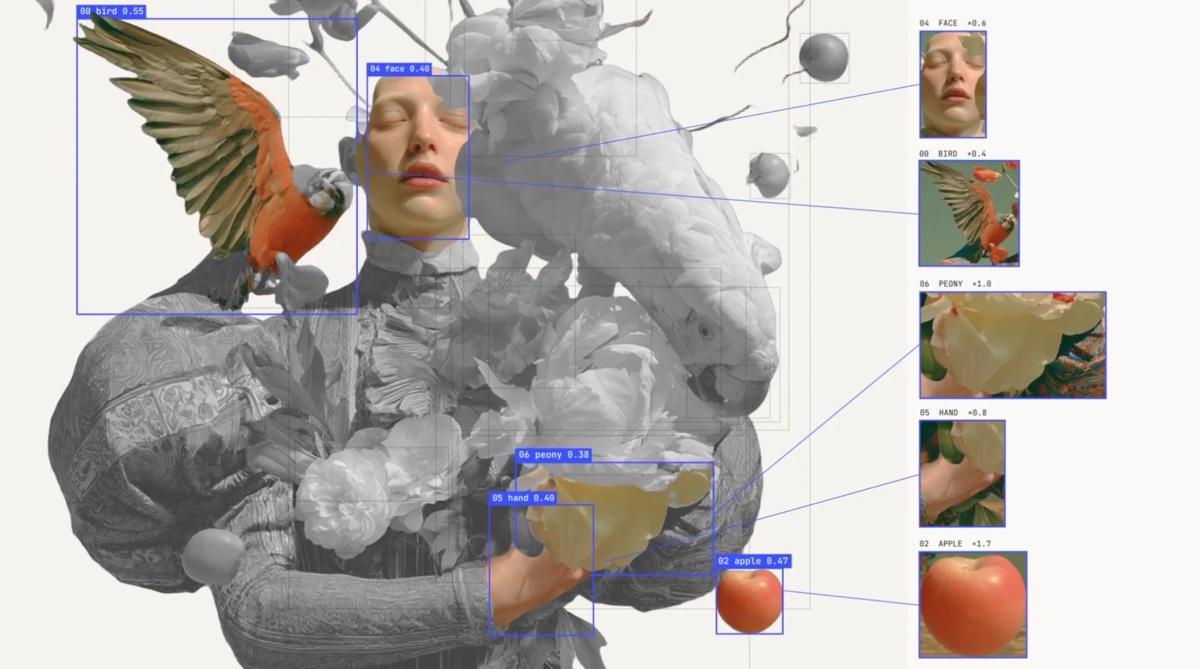
The news came from an account that posts as @contraben and describes its owner as building Contra and Contra Labs. Its post about Gestalt had about 400,000 views when we checked on November 19. We read the benchmark's write-up, its leaderboard and its method pages, and we compared the figures across them.
The short version
- Gestalt is first, and anonymous. It has about 1,930 Elo and wins 90% of its matchups. Contra labels it 'stealth' and hasn't said who built it.
- It beat the human designs 20 times out of 28. That is a small sample. By our arithmetic, the true rate could plausibly sit anywhere from about 53% to 85%.
- Designers still rank above every public model. The human designs hold second place at 1,739 Elo. Claude Fable 5.2 is third at 1,713, and the two are within each other's margin of error.
- Six public models form a clear top group. They are three Claude models, two GPT models and Kimi K3.1 Pro. Google's and Meta's models land well below them.
- Nobody outside can verify the top result. Gestalt isn't available, and the dataset is shared only on request.
- Contra's pages disagree on several numbers. The designer count appears as 35 and as 68, and the launch posts used an earlier vote count.
- The slop checklist is the practical takeaway. Contra names specific habits, such as a small all-caps label above every heading, that mark a page as AI-made.
What the Frontier Design Benchmark is
Contra is a marketplace where companies hire freelance designers. Its research arm, Contra Labs, built the Frontier Design Benchmark with a company called BenchFlow. The idea is to test AI models on the kind of design job a client pays for and to have working designers judge the results.
The benchmark has 33 tasks. Contra says 27 are based on real jobs posted on its marketplace, rewritten for fictional clients, and six come from startups that hired a Contra designer for the same project. The tasks include multi-page marketing sites, landing pages, web apps with working checkouts and two mobile apps. Many briefs come with a logo and other brand files.
Each model built every task inside a sandbox run by BenchFlow. Contra also had designers make a human version for some tasks, which it calls a golden design. Its write-up refers to 19 of these. The designers made a moodboard, got feedback from Contra's team, built the site and revised it after more feedback.
Then 35 designers voted. Each saw two designs for the same brief, side by side, without knowing which model or person made them, and picked the better one. Contra turned 4,311 votes into Elo ratings, the same kind of score used to rank chess players. It also graded every design against a rubric of design principles and ran it through a tool it calls the Slop Detector.
The results
| Rank | Entrant | Maker | Elo | Wins | Slop reading |
|---|---|---|---|---|---|
| 1 | Gestalt | Not named | 1,931 | 90% | 1 |
| 2 | Human designs | Contra designers | 1,739 | 74% | 1 |
| 3 | Claude Fable 5.2 | Anthropic | 1,713 | 73% | 31 |
| 4 | Claude Opus 5.5 | Anthropic | 1,691 | 73% | 32 |
| 5 | GPT-6.1 Sol | OpenAI | 1,668 | 70% | 53 |
| 6 | Claude Sonnet 5.5 | Anthropic | 1,667 | 69% | 38 |
| 7 | Kimi K3.1 Pro | Moonshot AI | 1,663 | 71% | 66 |
| 8 | GPT-6 Astra | OpenAI | 1,638 | 66% | 41 |
| 9 | Qwen3.8 Max | Alibaba | 1,434 | 39% | 32 |
| 12 | Gemini 4 Carbon | 1,366 | 36% | 54 | |
| 13 | Muse Spark 1.3 | Meta | 1,335 | 31% | 35 |
| 15 | Grok 4.7 | xAI | 1,247 | 23% | 26 |
| 16 | Gemini 4 Argon | 1,221 | 20% | 57 | |
| 17 | DeepSeek V4 Pro | DeepSeek | 1,121 | 12% | 1 |
Three things stand out below the top line. The first is the gap in the middle of the table. Six public models score between 1,638 and 1,713, and the next one down scores 1,434. Contra's write-up says the models 'are starting to split into two groups on design capability.'
The second is who is in the lower group. Both of Google's Gemini 4 models and both of Meta's Muse models finish there, along with Grok 4.7. Gemini 4 Carbon ranks near the top of general tests of reasoning, so this benchmark is measuring something those tests miss.
The third is what's missing. OpenAI's GPT-6.2 models came out the day before the benchmark and aren't on the board. We covered their mixed early reviews on November 17.
What we know about Gestalt, and what we don't
Contra's write-up calls Gestalt 'a high-quality design model currently in stealth' and says the company is 'working with the team' behind it. When people on X asked who made it, the @contraben account replied 'great Q' to one and an eyes emoji to another.
- We don't know who made it. Guesses on X name most of the large labs. One widely followed investor wrote that it isn't from Anthropic, OpenAI, Google, xAI or SSI, and gave no source. One popular rumor was labeled a joke by the person who started it.
- We don't know if it's a single model or a product built around one. A design tool that combines a model with templates, image generation or a review step would count as a different kind of entrant.
- We don't know how its pages were produced. Contra says it ran the public models itself through BenchFlow. The write-up says Gestalt went through 'the same blind voting,' and it doesn't say who generated Gestalt's designs or with what setup.
- We can't test it. There is no public access, and Contra's dataset page says the data 'isn't public' and is available by request.
None of this means the result is wrong. It means the result rests on Contra's word for now. Contra sells design evaluation and data to AI labs and invites them to book a call at the end of its write-up, so it has a business interest in a benchmark that labs want to top. Contra hasn't said whether it has any stake in Gestalt beyond evaluating it.
Did Gestalt really beat the human designers?
On the overall board, yes. Gestalt is 192 Elo points above the human designs. The leaderboard's 95% intervals for their win rates don't overlap: 86% to 92% for Gestalt and 71% to 78% for the human designs.
The head-to-head number is thinner. Designers compared a Gestalt page directly with a human golden design 28 times and chose Gestalt in 20. That is 71%. A sample of 28 can't pin the rate down closely. We calculated a 95% interval of about 53% to 85%, which is our arithmetic and doesn't appear in Contra's material.
Two more points belong next to that figure. Human designs exist for only some of the 33 tasks, so the comparison covers part of the benchmark. And the human designs still win 74% of all their matchups. Against every public model, working designers remain ahead, though their lead over Claude Fable 5.2 is 26 points and inside the margin of error.
Contra's own launch said the opposite of its headline a few minutes earlier. The first thread reported that human designers ranked first across 15 models and 3,591 votes, and Contra's company account posted that designers are still better. The Gestalt post followed 24 minutes later, and the site now shows 16 models and 4,311 votes.
Where Contra's own pages disagree
We compared the figures across the write-up, the leaderboard, the home page and the method pages. Several don't match. Most look like pages that weren't updated after the last round of voting, and none changes the ranking.
| Figure | One page says | Another page says |
|---|---|---|
| Designers who voted | 35 (write-up, leaderboard) | 68 (home page) |
| Votes | 4,311 (write-up, leaderboard) | 3,591 (launch thread); 'more than 3.6 thousand' (method page) |
| Gestalt's Elo | 1,928 (write-up) | 1,931 (leaderboard) |
| Rubric items | 34 (write-up) | 35 (home page, rubric page) |
| Agreement between two halves of the voters | 0.95 (write-up) | 0.92 (method page) |
We use 35 designers and 4,311 votes in this post because the write-up and the leaderboard agree on them.
The AI slop checklist
The most reusable part of the benchmark has nothing to do with Gestalt. Contra trained a classifier on human-made and AI-made pages and published some of the habits that give AI pages away. On its 0 to 100 scale, the human designs read 0.9 and most public models read from 18 to 66. The lowest-ranked model also reads near 1, and Contra says that's because many of its pages are unfinished.
These are the habits Contra has named so far. Its rubric page shows a diagram of eight and blurs out four of them.
- A small all-caps label above every heading. Contra says 93% of AI pages in its training set do this on at least half their sections, against 11% of human pages.
- One italic word in the headline. A designer in the study called it an AI pattern. One of the 19 human designs does it.
- Sections are numbered. They carry labels such as 01, 02, 03. Contra says no human page in its training set does this.
- Everything in a card. Most content sits in its own bordered box. Contra calls this the signature of Google's and Meta's models.
- A blurred glow behind the top of the page. Contra's diagram names it and gives no figures.
- An arrow on every button and link. Contra found the arrow tells you the lab. Claude models use a straight arrow on 80% to 90% of pages, and GPT models use a diagonal one on 84% to 92%.
The write-up also lists habits tied to one model. GPT-6.1 Sol writes headings as short paired slogans on 48% of its pages. Gemini 4 Argon dresses marketing sections up as technical readouts on 88%. Kimi K3.1 Pro tilts cards and phone mockups on 64%, and it has the highest slop reading on the board at 66 despite ranking seventh.
That last result is worth a second look. A page can look AI-made and still win votes, and a rubric can miss what voters see. Contra found the human designs scored 74 on its rubric, below six AI entrants, because of visible errors such as a button label that was too dark to read. Designers chose those human pages 74% of the time anyway. Contra's explanation is that the rubric counts mistakes and doesn't measure taste.
How to use this
- You review AI-built pages. Check each one against the six habits above before anything else. Removing them is quick, and it's the difference Contra's classifier measures.
- You're choosing a model for design work. The top six public models are close. Claude Fable 5.2 and Claude Opus 5.5 lead on votes and on the rubric, and GPT-6.1 Sol is fifth. Treat gaps of 20 or 30 Elo points as ties.
- You want to check the ranking yourself. Give one of your real briefs to two of the top public models, strip the labels and have your designers vote. A handful of blind comparisons on your own work tells you more than a leaderboard built on someone else's.
- You hire designers. This benchmark has professional designers ahead of every model you can buy today. The one entrant above them can't be bought or inspected.
- You're waiting for Gestalt. Nothing has been announced. Treat any claim about its maker as a guess until the maker says so.
Our read
The benchmark is a real step forward. Real briefs, blind votes and paid professionals as judges fix the main weaknesses of earlier design leaderboards, and Contra publishes its intervals and its repeat checks. The ranking of public models is believable and useful.
The Gestalt result needs a different standard. An unnamed model that can't be tested, entered into a benchmark run by a company that sells services to model makers, is a claim waiting for evidence. The 20-of-28 figure is being repeated as proof that AI now out-designs people, and it's too small to carry that. We'll update this post when the maker is named or when someone outside Contra can run the model.
We also ran the checklist on ourselves. This site is built with Claude tools, and our pages use at least three of the six habits: small all-caps labels above diagram titles, numbered section lists and straight arrows. Contra's data says Claude models reach for exactly those. We're leaving them in place for now and we'll remember where they came from.
Where these apps rank