
Signals
What Is Tasks in Gemini? Google's Free Errand Agent, What It Can Do, and How It Compares to Muse, Dots, Grok Bot and Claude Duet
By the Top5Apps editorial team · Published November 18, 2026 · Updated November 20, 2026 · 10 min read
Short answer: Tasks in Gemini is Google's agent for errands. You switch the Gemini app from Chat to Task, describe a job, and Gemini does it in the background and reports back. As of November 17, 2026 it's free for adults in six countries, which makes it one of two free agents among the five compared here, alongside Meta's Muse. In the US it can also phone businesses for you, and Grok Bot is the only rival that documents the same feature as shipped. OpenAI's Dots costs at least $100 a month, and Claude Duet still needs an invitation.
(Disclosure, per The Receipts Standard: this site is produced with Claude-family tools. Claude Duet, from the same company, is one of the five products compared here.)
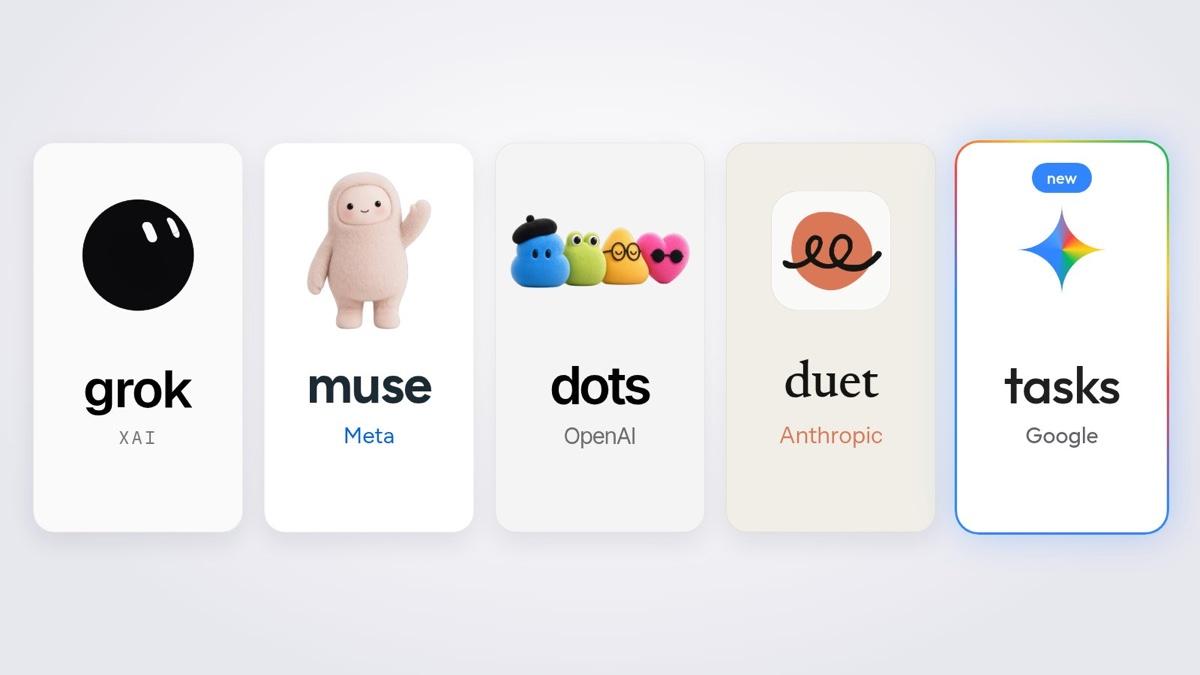
Google's announcement post had about 920,000 views when we checked on November 18. We read the announcement, Google's release notes and three of its help pages, and we re-checked the current price, countries and features of the four rival agents against each company's own documentation.
The short version
- Tasks is free in six countries. Those are the US, Canada, Australia, India, Japan and South Korea. You need a personal Google account and must be 18 or older.
- It used to be Gemini Spark. Google renamed the agent and moved it into the main Gemini app behind a Chat and Task switch.
- Four features are US only. Phone calls to businesses, checkout with Google Pay, texting Gemini and emailing Gemini all start in the United States.
- Free has limits. Free scheduled tasks run once a day at most, and you can keep 10 schedules active. Subscribers get exact times and 50.
- Europe is left out. Tasks isn't available in the EEA, the UK or Switzerland, even with a subscription.
- Price is its edge over rivals. Muse is also free. Claude Duet starts at $20 a month, Grok Bot at $30 and Dots at $100.
- We haven't tested it yet. This post is built from documentation. Our own errand test is still to come.
First, what an agent like this does
A chatbot answers a question and waits for the next one. An agent takes a job with several steps and carries it out. You might ask it to find three plumbers, phone each for a quote and put the cheapest on your calendar.
To do that it needs access a chatbot doesn't have. It reads your email and calendar, opens websites, and in some cases makes calls or pays for things. That access is why the permission and safety sections below matter as much as the feature list.
What Tasks in Gemini is
Tasks is a mode inside the Gemini app. Above the text box there is a switch with two positions, Chat and Task. In Chat, Gemini answers you. In Task, you describe a job, and Gemini works on it in the background and tells you when it's finished.
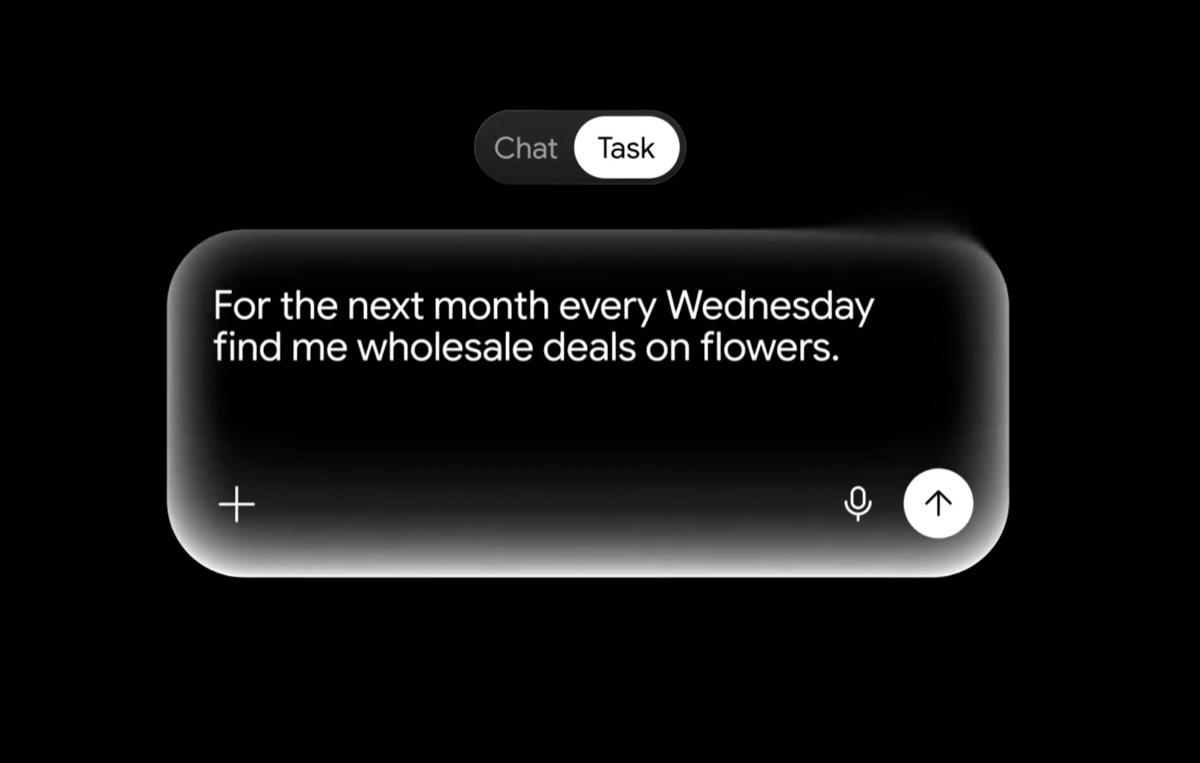
Google's announcement gives three examples from the executive who runs the Gemini app. Gemini phoned two car dealerships and booked a service appointment. It read past electric bills and found that a heat pump was running at peak prices. It compared phone chargers, found a discount code and checked out with Google Pay.
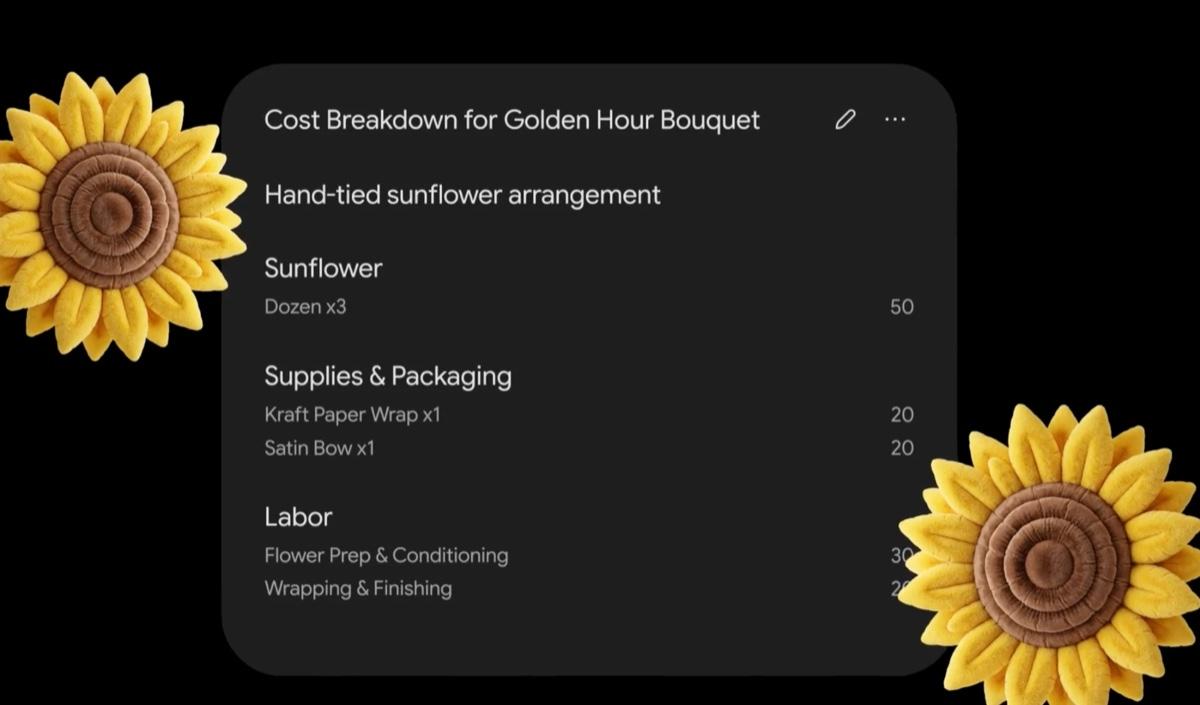
Google's product page shows the same pattern for a small business. In its video a flower seller asks Gemini to itemize and update an inventory when orders come in, and Gemini returns a cost sheet for one bouquet.
Each task runs on a virtual computer in Google's cloud that is set aside for your account. Google says the machine is 'never shared with other users.' Because the work happens there, a task keeps going after you close the app or lock your phone.
You can also put a task on a schedule. Google's examples include a morning summary of your email and calendar, and a regular check for recurring charges you no longer need.
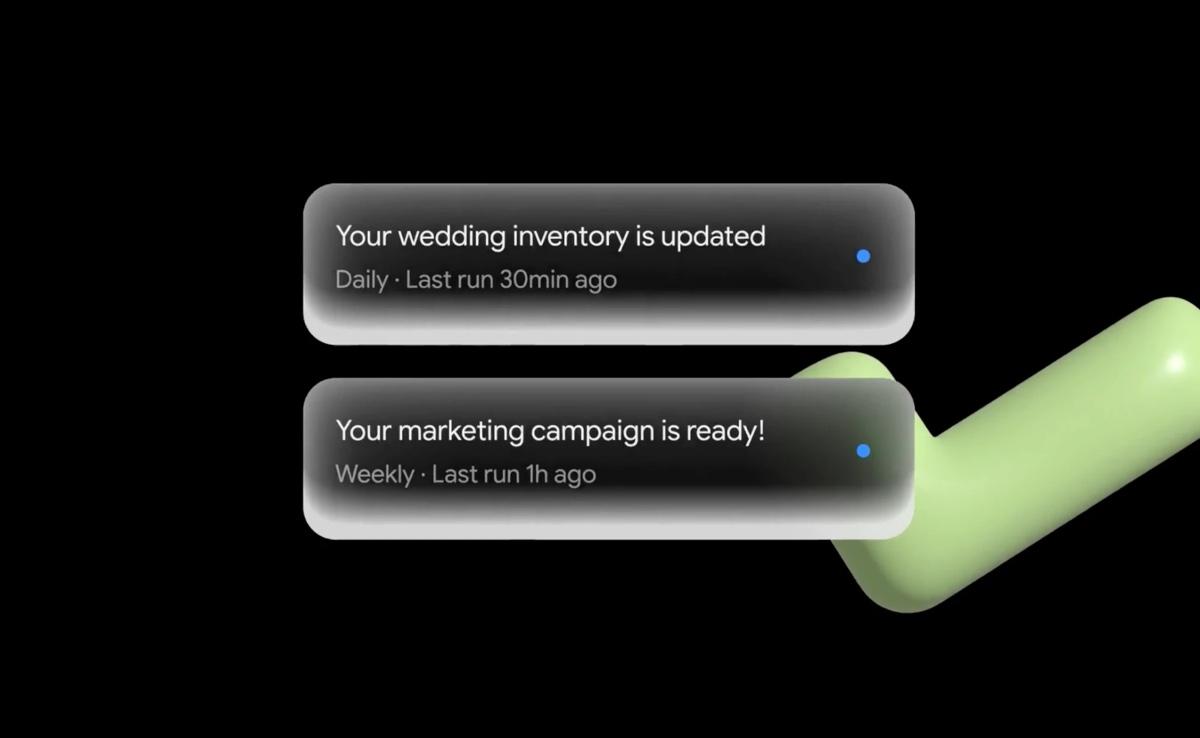
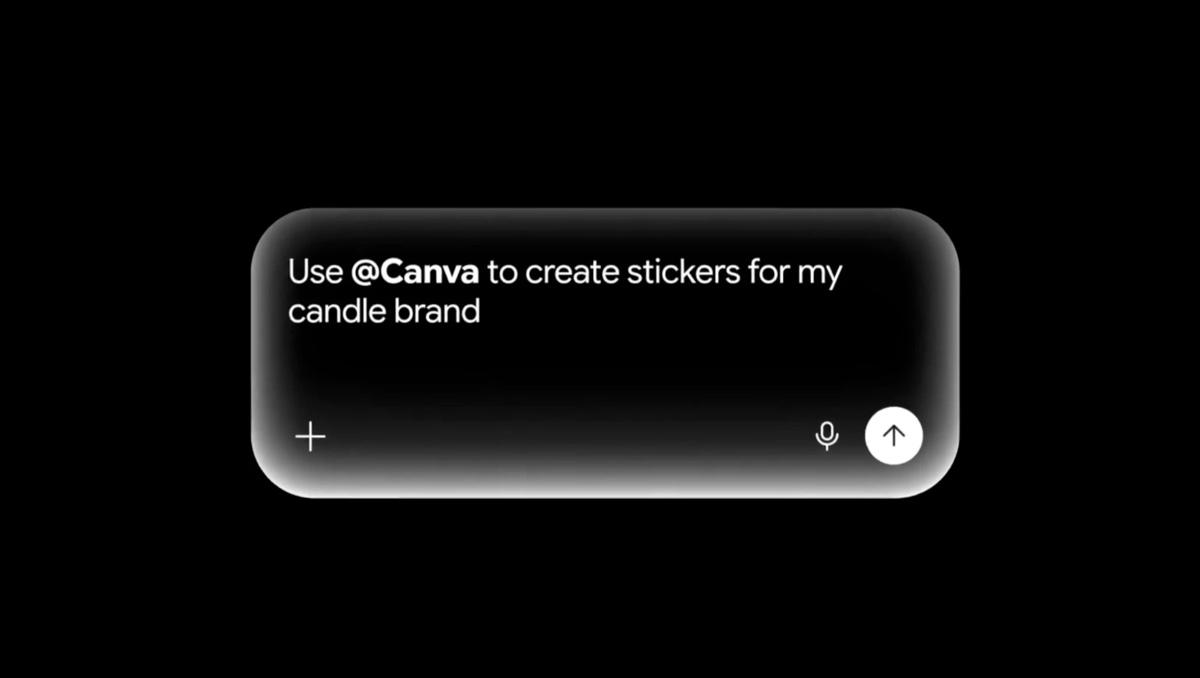
Tasks can also work in other apps you've connected. Google says Gemini connects with more than 60, and its video shows a request that names one with an @ sign.
It used to be called Gemini Spark
If Tasks sounds familiar, you may know it under its old name. Google launched this agent in May 2026 as Gemini Spark, a test for its most expensive subscribers. It has since renamed the feature, and press reports put the change in early October. Google's help page explains: 'we renamed it Task to make it easier to understand.'
The same page says tasks and schedules you made under the Spark name are still in the sidebar. We reviewed the agent as Gemini Spark when it required a $19.99 subscription. The free tier is the biggest change since that review.
What changed on November 17
Google made two announcements a few hours apart. The first made Tasks free in six countries. The second added a set of features for the United States only.
| What's new | Where | What to know |
|---|---|---|
| Tasks at no charge | US, Canada, Australia, India, Japan, South Korea | Runs on Gemini 4 Hydrogen. You need a personal Google account and must be 18 or older. |
| Phone calls to businesses | US, except five states | Gemini shows you a call plan to approve, says it's an AI on the call, and gives you a transcript. |
| Checkout with Google Pay | US | You set a spending limit and Gemini asks before it buys. Google's posts say you can also pre-approve purchases within the limit. |
| Texting Gemini | US | Works in Google Messages and iMessage after you verify a US phone number. |
| Emailing Gemini | US | Forward a message to gemini@google.com. It replies only to you. |
| Signing in with saved passwords | Region not stated | Uses Google Password Manager, with your permission, to reach sites such as a utility account. |
Google describes the free rollout as reaching 'hundreds of millions' of people. That is Google's own estimate of who is eligible. It hasn't said how many people have used Tasks.
The calling feature is the one no rival offers in the same form. Sundar Pichai's post says calls come with full transcripts and approval before dialing. Google's release notes add that Gemini can call several shops at once, place calls during business hours and repeat a call on a schedule. Businesses can opt out of receiving these calls.
What you get free, and what a subscription adds
Free doesn't mean unlimited. Google's help pages set out what changes when you pay for Google AI Pro at $19.99 a month or Ultra above it.
| Free, or Google AI Plus | Google AI Pro or Ultra | |
|---|---|---|
| Scheduled tasks | Once a day at most, in a general window: overnight, daytime or evening | Exact times, as often as hourly |
| Triggers | Time only | Time, an incoming Gmail message, or a news topic |
| Active schedules | 10 | 50 |
| Tasks running at once | 15 | 15 |
| Usage limit | Lower, and reduced first when demand is high | Higher |
| Countries | The six listed above | Most countries where Gemini works |
Google measures usage by computing effort, so there is no fixed number of tasks per day. Its limits page says your allowance refreshes every five hours until you reach a weekly cap. A long task that browses many sites uses more of it than a short one. Google also says a scheduled task won't run if you've hit your limit at that moment.
Who can't use it
- People in Europe can't use it. Tasks isn't available in the European Economic Area, the United Kingdom or Switzerland, with or without a subscription. It's also unavailable in Nigeria. Asked about the UK, the Google vice president in charge replied that it would come as soon as possible and that the UK and EU require extra steps.
- Work and school accounts don't qualify. Google says the feature works only with a personal Google account for now.
- Nobody under 18 can use it. Google requires users to be 18 or older.
- You can't use it with Gemini's history off. Google lists 'Have History on' as a requirement. Tasks won't run without it.
- Free access stops at the six countries. Elsewhere, Tasks still needs a Pro or Ultra subscription.
How Tasks compares with Muse, Dots, Grok Bot and Duet
Five large companies now sell an agent of this kind. We re-read each company's own pricing and help pages on November 18, because several facts had changed since our earlier coverage. The product xAI's documentation calls Grok Bot is the one people often call Grok bots.
Update, November 20: two things have changed since we published. OpenAI said on November 19 that it has started testing Dots with a small number of ChatGPT Plus users and is bringing them to Business Standard plans. Google also said Tasks can now run on Gemini 4 Neon for subscribers, which we cover in our Gemini, Claude and ChatGPT comparison.
For more on each rival, see our Muse review, our Grok Bot review, our Dots comparison and our Claude Duet explainer. Some details in those pieces predate the changes listed here.
| Agent | Lowest price | Free tier | Who can get it |
|---|---|---|---|
| Tasks in Gemini (Google) | Free | Yes, in six countries | Adults with a personal Google account. Not in the EEA, UK, Switzerland or Nigeria. |
| Muse (Meta) | Free | Yes, with a usage limit | Adults in the US, Canada, Singapore and Australia. Paid plans cost $20 and $100 a month. |
| Dots (OpenAI) | $100 a month | No | ChatGPT Pro subscribers outside the EEA, UK and Switzerland, plus Business Premium, Enterprise and Edu plans. Plus doesn't include it. |
| Grok Bot (xAI) | $30 a month | No | Subscribers to the X Premium plan or higher. xAI doesn't publish a country list. |
| Claude Duet (Anthropic) | $20 a month | No | Claude Pro, Max and Ultra subscribers in the US, by waitlist or invitation. It's still a research preview. |
Price is where Google's move matters most. Until this week Meta was the only one of the five with a free agent, and Meta has announced it in four countries. Google now offers one free in six, including India and Japan, where we found no free agent from the other four.
| Agent | Calls businesses | How you reach it | How it pays | Model |
|---|---|---|---|---|
| Tasks in Gemini | Yes, in the US except five states | Gemini app; text and email in the US | Google Pay with a spending limit you set (US) | Gemini 4 Hydrogen on the free tier |
| Muse | Experimental, in Meta's words | Muse app, WhatsApp, its own email address | Link by Stripe or a saved card; it always asks first | Meta's own models |
| Dots | No. OpenAI's docs say this is planned | ChatGPT; iMessage and RCS for Pro users in three countries | ChatGPT Wallet, with a security check on each purchase (Pro, US) | GPT-6 Astra and GPT-6.1 Terra |
| Grok Bot | Yes, US only, since November 4 | X Chat, Slack, tags on X, its own email address | A card saved in its Vault can pay without asking each time | Chosen per task; you can't pick |
| Claude Duet | No | Its own app and claude.ai | Link or Shop Pay, with approval every time | Claude Opus 5.5 |
All five run your jobs on a computer in the company's cloud, so the work continues when your phone is off. Google, Meta, OpenAI and Anthropic each describe a machine dedicated to you or your agent. xAI's documentation says one machine is shared by all of a user's Bots.
Where Tasks is ahead
- It wins on price and reach. It's free in six countries with no waitlist. Dots costs at least $100 a month and Duet needs an invitation.
- It makes phone calls. Google and xAI are the only two that document calling as a shipped feature. Google's version calls several businesses at once and shows you the plan before it dials.
- Your Google data is already there. Gmail, Calendar, Drive, Photos, saved passwords and payment cards need no setup. Google's own pitch is that this data doesn't have to leave Google.
- You set a spending limit. Google documents a hard cap for purchases. We found no stated purchase cap in the documentation for the other four.
- It has three ways in. You can use the app, send a text or forward an email. Only Muse and Grok Bot also take tasks by email.
Where the others are ahead
- Muse works where your chats are. It takes tasks in WhatsApp, and Meta has added voice, avatars and retail partners in the past two weeks. It's also free.
- Dots and Grok Bot do more technical work. Each gives the agent a cloud computer with a browser, and Grok Bot's includes a terminal. Google pitches Tasks at household errands.
- Grok Bot runs more often. It allows up to 50 routines per Bot, as little as five minutes apart. Free Tasks schedules run once a day.
- Duet reaches more work apps. Anthropic lists more than 6,000 connectors. Google says Gemini connects with more than 60 apps.
What to know before you hand it your accounts
- Google calls it experimental. Its help page says Gemini's ability to handle tasks 'is experimental' and that your supervision matters.
- Scheduled tasks can run while you're away. Google warns that if a schedule runs when you're offline, you may not be able to stop an unintended action. It advises against scheduling anything sensitive.
- Don't type passwords into a task. Google tells users to keep sign-in and payment details out of the task thread and to enter them on the web page themselves.
- It pauses before key steps. Google says Gemini asks before it clicks Buy. You can switch a routine action to 'Always allow,' and that choice removes the pause.
- History has to stay on. Tasks requires Gemini's History setting. Our Spark review covers what that setting does with your data.
- It will fail sometimes. Google's announcement says tasks may fail or miss, and that on some sites Gemini gets most of the way and then hands the screen back to you.
Which one to pick
- You've never used an agent. Start with Tasks or Muse, because both are free. Pick Tasks if your email and calendar are in Google, and Muse if you live in WhatsApp and Instagram.
- You want it to make phone calls. Tasks is the free choice in the US. Grok Bot also calls, from $30 a month.
- You're in the UK or EU. Tasks, Dots and Duet aren't available to you, and Meta hasn't announced Muse in Europe. Grok Bot is the one to check. Its documentation lists one feature as unavailable in the UK and EU, which suggests the rest works there. That last point is our inference.
- You already pay for ChatGPT Pro, X Premium or Claude. Try the agent you already have before adding another. Tasks costs nothing to run beside it.
- You run a business on work accounts. Tasks doesn't support work or school Google accounts yet. Dots and Grok Bot both have team plans.
What we haven't tested
We haven't run Tasks on real errands yet, and nothing above is a hands-on result. Every claim about what it does comes from Google, and every claim about a rival comes from that rival's documentation. A feature list tells you what a company says its agent can do. It doesn't tell you how often the agent finishes the job.
Our plan is to give Tasks three real errands: one booking, one piece of research, and one job we expect it to fail. We'll add the results here, including the failures.
Our read
Google's advantage here is distribution. Most people who might try an agent already have a Google account, a Gmail inbox and a card in Google Pay, and from this week they can try one without paying. Nobody else in this group can say all three of those things.
The free tier is narrower than the headline suggests. One scheduled run a day in a loose time window is enough for a morning summary, and it's too little for anything that needs to react quickly. The most interesting features, calls and payments, are limited to the US, and Europe gets nothing.
Tasks still changes the comparison. A month ago, trying a capable agent from Google, OpenAI, xAI or Anthropic meant a subscription or a waitlist. If you're curious and you live in one of the six countries, Tasks is now the cheapest way to find out whether you'd use one. Start with a job where a mistake costs you nothing.
Where these apps rank