
Guides
How to Make the 'Rumpelstiltskin (1987)' Tip-Toe Barn AI Video (There Is No Such Scene — Here's How to Fake a Lost Film Honestly)
By the Top5Apps editorial team · Published October 4, 2026 · Updated October 4, 2026 · 7 min read
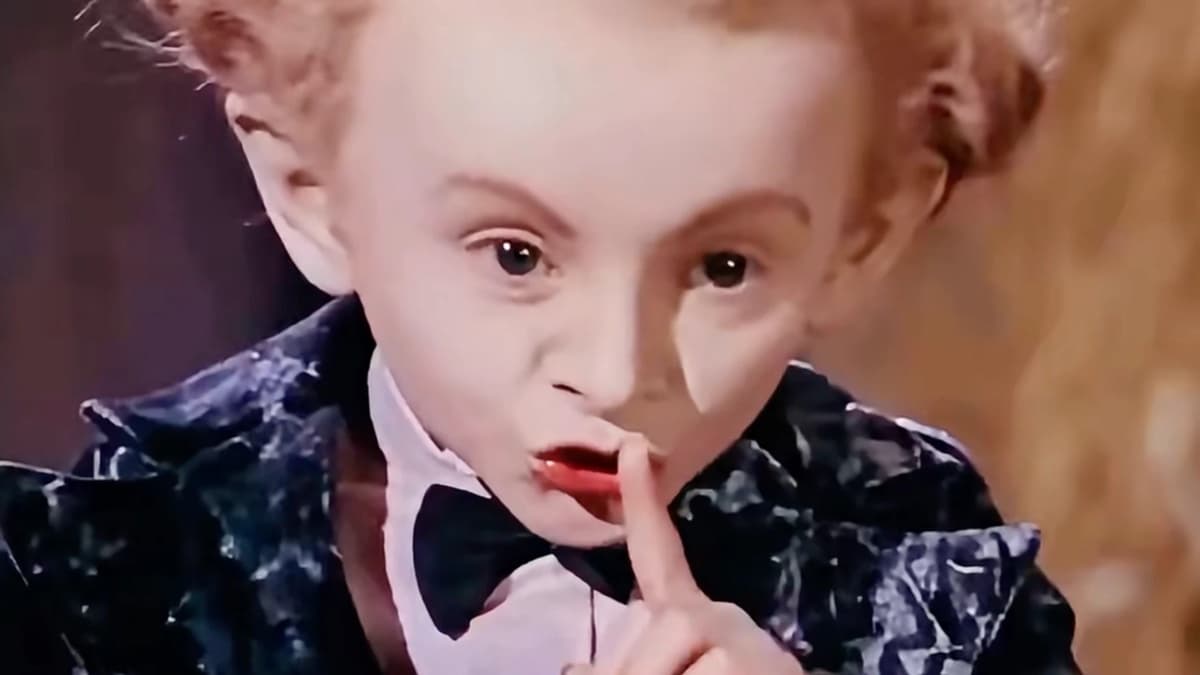
Short answer: this is a fake lost film, and the trick is three locks — a character sheet, a set still, and an era — animated in short beats and graded to look like a print that sat in a basement. The clip: a child-sized man with frizzy ginger hair, painted-on wrinkles, a black velvet tuxedo and bow tie peeks from behind a hay bale, tiptoes toward the camera, puts a finger to his lips, dances in the straw, turns it into a mountain of gold coins, and kisses the delighted blonde who was crying in it. It went around X on October 3 captioned 'Rumpelstiltskin (1987 film)' and is at 242,000 views; TikTok had been running it under the same label since late September. There is no such scene. The real Rumpelstiltskin (1987) is a Cannon Movie Tales musical shot in Israel with 62-year-old Billy Barty in a feathered cap and brown tunic, and its spinning happens in a castle room. The barn clip is AI — nobody has claimed it or named a tool — so this is a reconstruction, labeled as one, like our camcorder vlog guide. The difference from that one is the ethics: the camcorder format invents a memory; this one impersonates a real movie. Make the look, keep the joke, put 'AI' on the title card.
What the clip is, and what it isn't
UAPLuigi@UAPLuigi
Rumpelstiltskin (1987 film) 🎥🎬📽️
View original post ↗
The X copy is 28.9 seconds, 1080×612 — a letterboxed widescreen look — with no title card, no watermark, and no credits. Its beats: the woman crying in the hay (0–5s); the imp tiptoeing in and shushing the lens (6–9s); his grin and her gasp, hand over mouth (9–12s); the arms-out dance in the straw (12–15s); the hay becoming coins (20–23s); clapping, hand-holding, a kiss (24–29s). One reply — 'This is NOT from 1987' — got 'Yes it is' from the poster, and a reply attaching a photo of Billy Barty's actual costume got 21 views. The fiction won the thread. The facts: Rumpelstiltskin was released April 10, 1987, directed by David Irving, produced by Menahem Golan and Yoram Globus, with Barty in his only lead role, Amy Irving as the miller's daughter, and Clive Revill as the king; the AFI catalog places the spinning in the king's castle. The library passed from Cannon to MGM, which put the film on DVD in 2005, and now sits with Amazon MGM Studios. The clip's tells are the usual ones: the imp's face geometry shifts between the shush and the grin, the gold arrives as an instant pile, and no spinning wheel ever appears.
On the audio: the 'tip-toe' framing comes from a decade-old meme — Riff Raff's 'Tip Toe Wing in My Jawwdinz' (June 2014, Mad Decent) spawned a Vine format of people and animals literally dancing on tiptoe, per Know Your Meme. Whether that song is on the viral barn copies we couldn't confirm; the X copy carries its own soundtrack and no caption names a track. Treat 'it's the Riff Raff meme' as context, not fact.
What stays, what changes
- Stays: the dark barn, loose hay, one small formal dancer, the tiptoe, the finger to the lips, the grain, the soft focus, the saturated Technicolor grade.
- Changes: the face, the costume, the woman, and what happens after the shush. The reaction-clip version — someone caught mid-mischief, then the shush — stands on its own; the gold and the kiss are optional.
- The gag is the fake provenance. That's also the misinformation. Keep the period card; put the disclosure on it.
How to make it (reconstructed — the maker never said)
1. Lock the character before you animate anything
One character sheet — front, side, full body — from GPT Image or Midjourney: short, large head, formal little suit or tails, bow tie, no modern shoes, hair that reads at thumbnail size. Attach the same sheet to every shot. This is the Jean Phil discipline; the imp's drifting nose in the viral copy is what happens when you skip it.
2. Lock the set as a still
Generate the barn as a photograph first — night, hay bales, one practical lantern, deep shadows — with the film look already baked in. If the still looks digital, the video will too. Our still prompt:
A 1970s European fairy-tale film still, shot on 16mm. A small man — the person from the reference sheet — in a dark velvet formal suit and bow tie, tiptoeing across loose hay in a barn at night. One lantern, deep shadows, warm saturated color. Slight gate weave, visible film grain, soft focus, light halation on the lantern. No modern objects, no text, no logo.
3. Animate in beats of four to six seconds
- One beat per generation: the tiptoe across the hay; the stop and the finger to the lips; the woman turning or gasping; the dance. Faces and feet drift in long takes — don't ask for the whole 29 seconds even though Seedance 2.5 can generate up to 30 in one pass.
- Seedance 2.5 with the sheet and the set still as references, or Kling 3.0 image-to-video from the set still (3–15 seconds a clip). Motion line for the shush beat:
He tiptoes four steps across the hay toward the camera, stops, looks into the lens, and slowly raises one finger to his lips. Camera locked off with slight handheld sway. Keep his face, height, hair, and suit identical to the reference sheet. No extra fingers, no morphing feet, no change to the barn.
4. Grade it like a print, not a filter
The era is sold in two places: the prompt and the edit. In the prompt, name the stock and its flaws — OpenAI's own Sora 2 prompting guide models the language: '1970s romantic drama, shot on 35 mm film with natural flares, soft focus, and warm halation. Slight gate weave and handheld micro-shake evoke vintage intimacy.' That sentence works in any video model. In CapCut, add grain, a soft vignette, a slight vertical jitter, one hair in the gate, and a title card in a period serif. A fake year is the gag — put 'AI' on the same card, not in a comment nobody reads. It's the same era-lock lesson as the camcorder guide: specificity about the instrument beats adjectives about the mood.
5. Audio last
The dance reads without a song. If you want the meme, use the Riff Raff hook only with rights to it or a cleared tiptoe sound; a template or a trending-sounds library is not a license.
Rights and labeling: the problem is the caption, not the clip
Nothing in the clip is borrowed — no real footage, no real face, probably no commercial song — which puts it in the camcorder vlog's clean category technically. What isn't clean is calling it a 1987 film. Amazon MGM owns the real one; David Irving, Amy Irving, and Billy Barty's estate are real people whose work is being misattributed; none of them, and not Riff Raff, has reacted. The platform rules are built for exactly this: YouTube requires disclosure when content 'generates a realistic scene that didn't actually occur'; TikTok requires creators to 'label AI-generated content that contains realistic images, audio or video'; Meta adds 'AI info' labels when it detects markers or 'when people disclose,' and reserves 'a more prominent label' for content that risks 'materially deceiving the public.' A clip whose whole engine is 'yes it is from 1987' is the case those rules were written for.
- Invent the film. 'The Miller's Daughter (1971)' is funnier and safer than a real title. Nobody's filmography gets a fake entry.
- Disclosure on the card. Period serif, fake studio, fake year, and 'AI' in the same frame. The joke survives; the misinformation doesn't.
- Don't answer 'is this real?' with 'yes.' The viral post's engagement came from exactly that reply. It's also the line between a parody and a hoax.
- Keep the audio clearable if you're publishing anywhere that fingerprints it.
Our read
This is the first format in the series where the craft is admirable and the caption is the product's defect. The look is genuinely well made — the grade, the child's face aged with paint, the restraint of a locked-off camera — and everything in it is invented, which is the cleanest kind of AI video to make. But it only traveled because it was labeled a real movie, and the poster defended that label when challenged. The technique is worth learning: three locks, short beats, name the film stock. The distribution trick isn't. Make your lost film, give it a title that never existed, and let the audience in on it. Our AI video ranking covers where Seedance and Kling stand for everything that isn't a barn.
Where these apps rank